

Xinjiang Petroleum Geology ›› 2025, Vol. 46 ›› Issue (6): 668-683.doi: 10.7657/XJPG20250603
• OIL AND GAS EXPLORATION • Previous Articles Next Articles
CAO Jian1( ), QIN Zhijun2, WEI Chao1, XIANG Baoli2,3, LIU Jin1,2,3
Received:2025-11-02
Revised:2025-11-13
Online:2025-12-01
Published:2025-12-05
CLC Number:
CAO Jian, QIN Zhijun, WEI Chao, XIANG Baoli, LIU Jin. Source-Reservoir Coupling and Sweet Spot Formation Mechanism of Continental Laminated Shale Oil: A Case Study of the Fengcheng Formation, Junggar Basin[J]. Xinjiang Petroleum Geology, 2025, 46(6): 668-683.
Add to citation manager EndNote|Reference Manager|ProCite|BibTeX|RefWorks
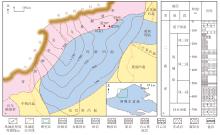
Fig. 1.
(a) Structural location of the Mahu sag in the Junggar Basin and (b) composite stratigraphic column of the Fengcheng formation (modified after Ref. [33])"

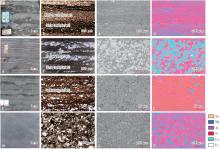
Fig. 2.
Characteristics of laminae and lithofacies in the Fengcheng formation, Mahu sag"
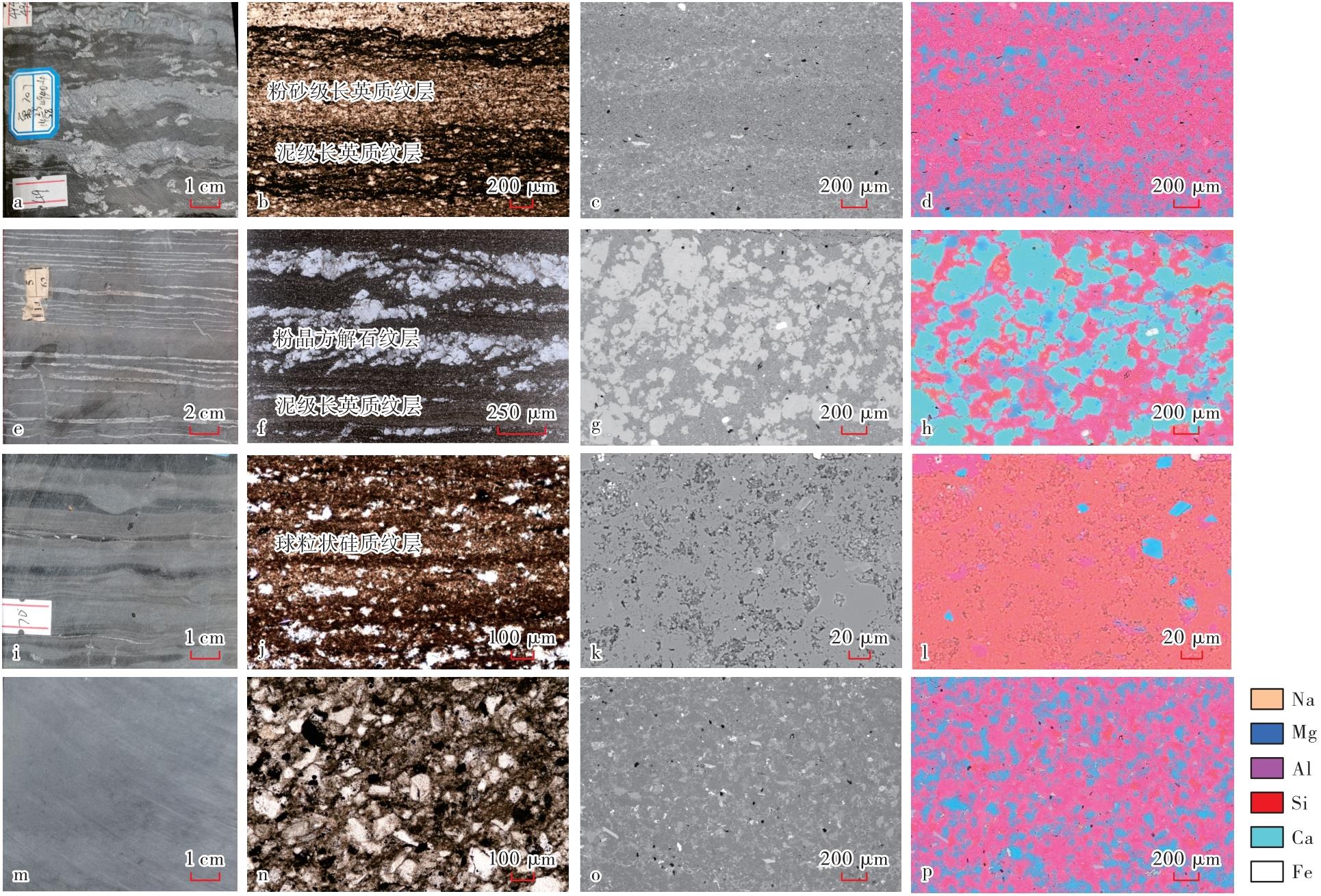
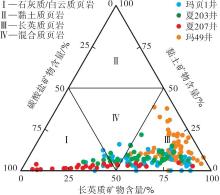
Fig. 3.
Triangle of lithofacies classification for the Fengcheng formation shale, Mahu sag"
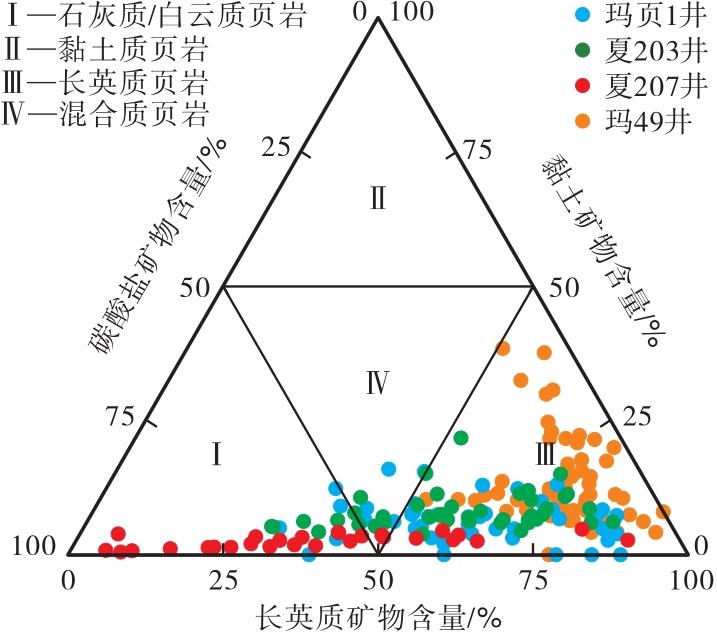
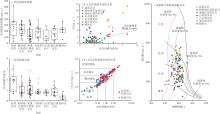
Fig. 4.
Oil contents and organic geochemical characteristics of lithofacies in the Fengcheng formation, Mahu sag"

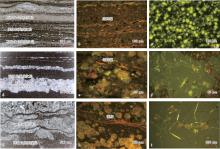
Fig. 5.
Fluorescence microscopic characteristics of typical laminated shales in the Fengcheng formation, Mahu sag"

Table 1.
Hydrocarbon source characteristics, reservoir space and oil-bearing properties of laminae in the Fengcheng formation, Mahu sag"
| 纹层类型 | 井名 | 深度/ m | 有机地球化学特征 | 储集特征 | 含油性 | ||||||
|---|---|---|---|---|---|---|---|---|---|---|---|
| 总有机碳含量/% | S1/ (mg·g-1) | S2/ (mg·g-1) | 热解 峰温/ °C | 氢指数/ (mg·g-1) | 主要储集空间 | 平均孔隙直径/ nm | 含油饱和度 指数/ (mg·g-1) | CLSM 轻/重比 | |||
| 粉砂级长英质纹层 | 夏203井 | 4 678.7 | 0.90 | 1.86 | 1.36 | 436 | 151.1 | 长石粒内溶蚀孔、 粒间孔 | 665.3 | 206.7 | 1.32 |
| 夏203井 | 4 741.5 | 0.96 | 2.16 | 3.35 | 427 | 349.0 | 890.1 | 225.0 | 1.31 | ||
| 泥级长英质纹层 | 夏203井 | 4 678.7 | 3.06 | 10.02 | 12.98 | 434 | 424.2 | 石英/长石晶间孔、 粒内孔、顺层缝 | 351.4 | 327.5 | 0.88 |
| 夏203井 | 4 741.5 | 1.82 | 5.04 | 5.21 | 429 | 286.3 | 596.8 | 276.9 | 0.96 | ||
| 夏203井 | 4 711.9 | 2.78 | 5.68 | 11.08 | 433 | 398.6 | 501.2 | 204.3 | 1.14 | ||
| 粉晶方解石纹层 | 夏203井 | 4 711.9 | 1.06 | 2.25 | 2.28 | 432 | 215.1 | 石英晶间孔、 粒间孔 | 549.7 | 212.3 | 1.01 |
| 粉晶白云质纹层 | 夏207井 | 4 938.5 | 1.16 | 2.53 | 2.68 | 439 | 231.0 | 石英/长石晶间孔、 白云石粒内溶蚀孔 | 431.6 | 218.1 | 1.13 |
| 球粒状硅质纹层 | 夏203井 | 4 678.7 | 1.45 | 4.09 | 4.36 | 440 | 300.7 | 石英晶间孔 | 329.2 | 282.1 | 1.15 |
| 碱类矿物纹层 | 夏207井 | 4 942.2 | 0.97 | 1.25 | 2.58 | 437 | 266.0 | 硅硼钠石晶间孔 | 128.9 | 0.93 | |
| 夏207井 | 4 950.3 | 1.05 | 2.20 | 3.18 | 432 | 302.9 | 447.1 | 209.5 | 0.99 | ||
Fig. 6.
Reservoir space characteristics of shales with different laminae in the Fengcheng formation, Mahu sag"
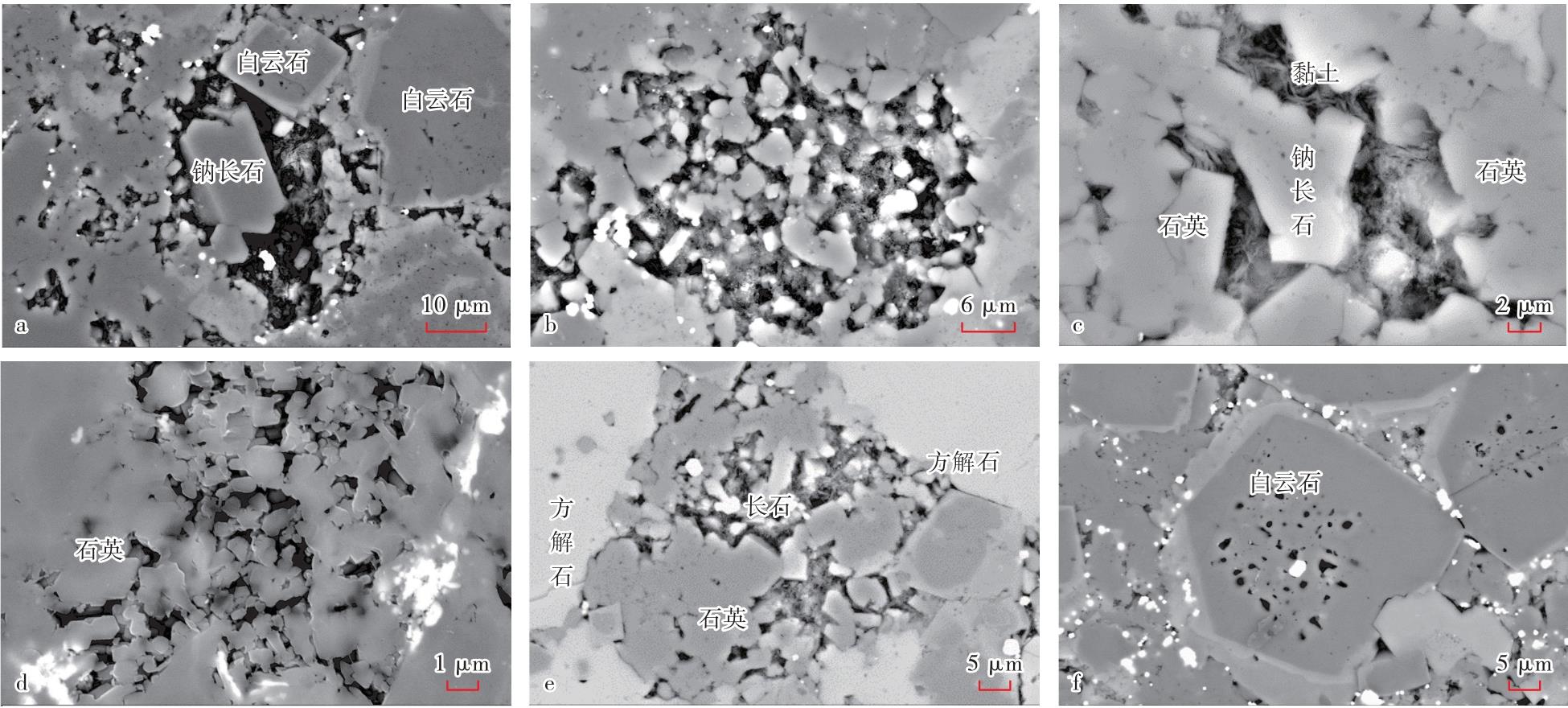
Fig. 7.
Occurrence characteristics and differences of shale oil in different laminae in the Fengcheng formation at 4 678.7 m of Well Xia203"
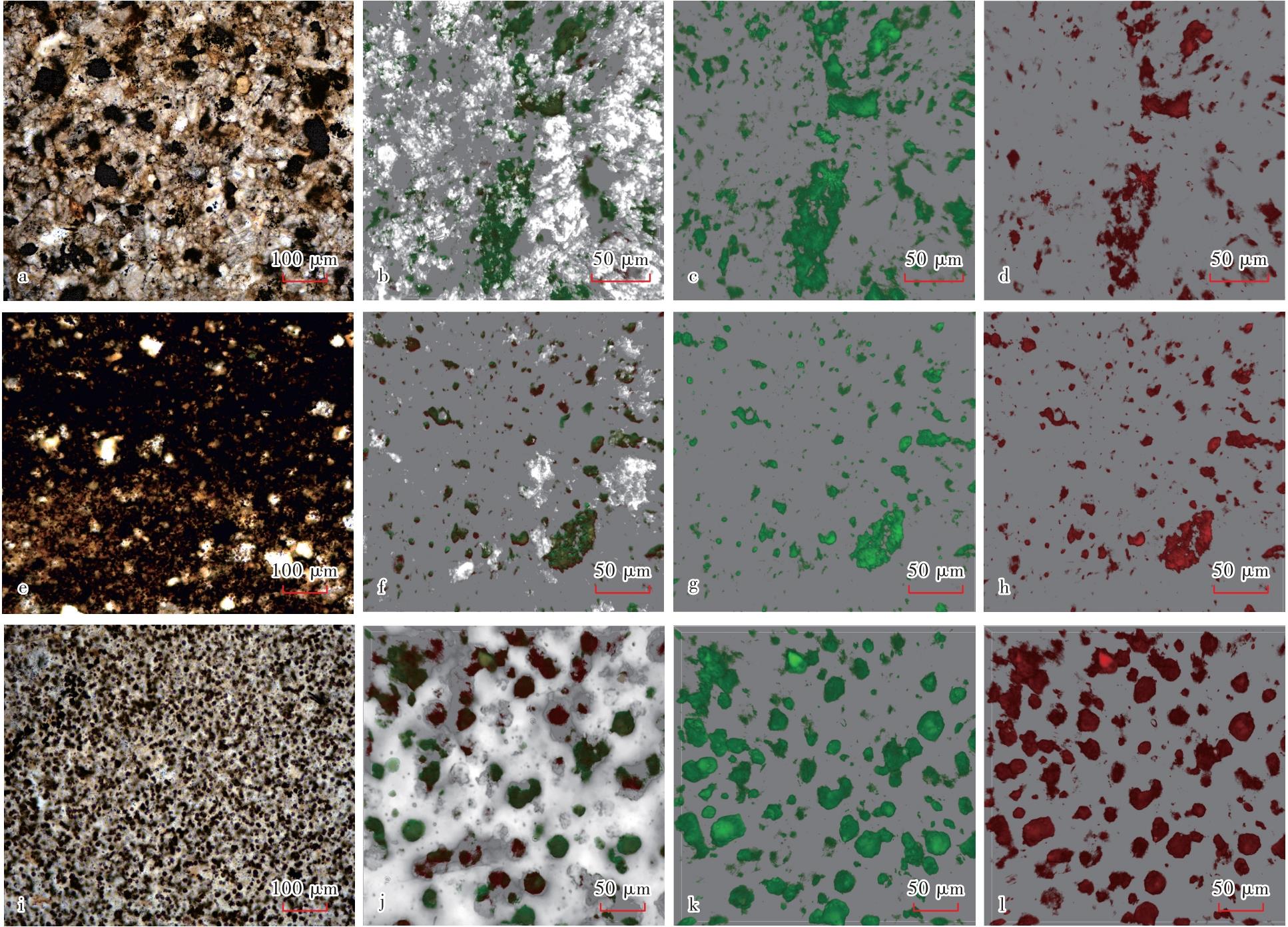
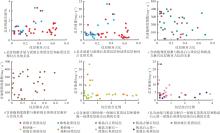
Fig. 8.
Relationship between organic matter abundance, oil content and laminae of shales in the Fengcheng formation, Mahu sag"

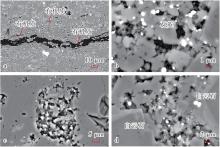
Fig. 9.
Microscopic characteristics of diagenesis in different laminae in the Fengcheng formation at 4 941.3 m of Well Xia207"

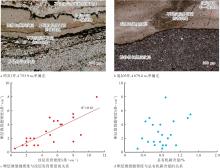
Fig. 10.
Microfracture characteristics in different laminae in the Fengcheng formation, Mahu sag"

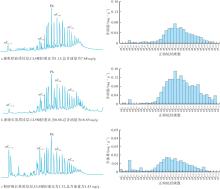
Fig. 11.
In-situ thermal desorption-gas chromatography and n-alkane distribution of typical laminae in the Fengcheng formation at 4 678.7 m of Well Xia203, Mahu sag"

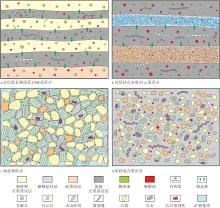
Fig. 12.
Shale oil enrichment models of the Fengcheng formation in the Mahu sag"

Table 2.
Lamina characteristics, source-reservoir conditions, and sweet spots evaluation of lacustrine shales under different depositional environments"
| 沉积 环境 | 地区和 层位 | 纹层及岩相特征 | 烃源条件 | 储集物性 | 含油饱和度 指数/ (mg·g-1) | 源储关系 | 甜点优选 | ||
|---|---|---|---|---|---|---|---|---|---|
| 主要纹层组合 | 典型岩相 | 总有机碳 含量/% | 镜质体 反射率/ % | 孔隙度/ % | |||||
| 淡水 | 松辽盆地 青山口组 | 富黏土质+长英质纹层 | 纹层状长英质页岩、黏土质页岩 | 0.9~3.8 | 0.5~1.2 | 4.0~8.0 | 42.0~400.0 | 源储一体 | 纹层状长英质页岩 |
| 鄂尔多斯盆地延长组7段 | 富有机质+粉砂级长英质/凝灰质纹层 | 块状粉—细砂岩、 纹层状长英质页岩 | 5.0~38.0 | 0.7~1.3 | 5.0~12.0 | 27.0~380.0 | 源储分离、 源储一体 | 粉—细砂岩、纹层状长英质页岩 | |
| 半咸水—咸水 | 渤海湾盆地 沙河街组 | 富黏土质+粉晶方解石纹层 | 纹层状石灰质页岩、泥质石灰岩 | 1.0~4.0 | 0.5~1.2 | 3.0~16.0 | 50.0~300.0 | 源储共生 | 纹层状石灰质页岩 |
| 渤海湾盆地 孔店组二段 | 富黏土质+长英质/白云质纹层 | 纹层状白云质页岩、纹层状长英质页岩 | 2.0~6.0 | 0.5~1.1 | 3.1~5.7 | 23.6~753.6 | 源储共生 | 纹层状长英质/白云质页岩 | |
| 准噶尔盆地 芦草沟组 | 富凝灰质+长英质纹层/灰云质纹层 | 块状白云质粉砂岩、石灰质/白云质页岩 | 2.0~14.0 | 0.6~1.1 | 4.0~12.0 | 20.1~570.0 | 源储分离 | 块状白云质 粉砂岩 | |
| 碱湖 | 准噶尔盆地 风城组 | 泥级长英质+粉砂级长英质/灰云质纹层 | 纹层状长英质页岩、纹层状灰云质页岩(含碱) | 0.1~3.3 | 0.5~1.6 | 0.2~10.6 | 15.1~627.0 | 源储共生 | 纹层状长英质页岩 |
| [1] |
JARVIE D M, HILL R J, RUBLE T E, et al. Unconventional shale-gas systems:The Mississippian Barnett shale of north-central Texas as one model for thermogenic shale-gas assessment[J]. AAPG Bulletin, 2007, 91(4):475-499.
doi: 10.1306/12190606068 |
| [2] | GUO Xusheng, WANG Enze, MA Xiaoxiao, et al. Lacustrine shale oil systems in China:Advances in characterization methods and resource accumulation models[J]. Earth-Science Reviews, 2025,270:105256. |
| [3] | 贾承造, 王祖纲, 姜林, 等. 中国页岩油勘探开发研究进展与科学技术问题[J]. 世界石油工业, 2024, 31(4):1-11. |
| JIA Chengzao, WANG Zugang, JIANG Lin, et al. Progress and key scientific and technological problems of shale oil exploration and development in China[J]. World Petroleum Industry, 2024, 31(4):1-11. | |
| [4] | 朱筱敏, 王晓琳, 张美洲, 等. 中国典型陆相盆地细粒沉积环境和岩相特征[J]. 石油与天然气地质, 2024, 45(4):873-892. |
| ZHU Xiaomin, WANG Xiaolin, ZHANG Meizhou, et al. Sedimentary environments and lithofacies characteristics of fine-grained sediments in typical continental basins in China[J]. Oil & Gas Geology, 2024, 45(4):873-892. | |
| [5] | 金之钧, 张谦, 朱如凯, 等. 中国陆相页岩油分类及其意义[J]. 石油与天然气地质, 2023, 44(4):801-819. |
| JIN Zhijun, ZHANG Qian, ZHU Rukai, et al. Classification of lacustrine shale oil reservoirs in China and its significance[J]. Oil & Gas Geology, 2023, 44(4):801-819. | |
| [6] |
郭旭升, 胡宗全, 申宝剑, 等. 中国页岩油气源-储耦合类型划分及勘探意义[J]. 石油学报, 2024, 45(11):1565-1578.
doi: 10.7623/syxb202411001 |
|
GUO Xusheng, HU Zongquan, SHEN Baojian, et al. Classification and exploration significance of source-reservoir coupling types of shale oil and gas in China[J]. Acta Petrolei Sinica, 2024, 45(11):1565-1578.
doi: 10.7623/syxb202411001 |
|
| [7] | WANG Yuxuan, XU Shang, HAO Fang, et al. Multiscale petrographic heterogeneity and their implications for the nanoporous system of the Wufeng-Longmaxi shales in Jiaoshiba area,southeast China:Response to depositional-diagenetic process[J]. GSA Bulletin, 2019,132:1704-1721. |
| [8] | LIU Bo, WANG Haoli, FU Xiaofei, et al. Lithofacies and depositional setting of a highly prospective lacustrine shale oil succession from the Upper Cretaceous Qingshankou formation in the Gulong sag,northern Songliao Basin,northeast China[J]. AAPG Bulletin, 2019,103:405-432. |
| [9] | ZHANG Tongwei, FU Qilong, SUN Xun, et al. Meter-scale lithofacies cycle and controls on variations in oil saturation,Wolfcamp A,Delaware and Midland Basins[J]. AAPG Bulletin, 2021,105:1821-1846. |
| [10] | XIN B, ZHAO X, HAO F, et al. Laminae characteristics of lacustrine shales from the Paleogene Kongdian formation in the Cangdong sag,Bohai Bay Basin,China:Why do laminated shales have better reservoir physical properties?[J]. International Journal of Coal Geology, 2022,260:104056. |
| [11] | CAO Yingchang, XI Kelai, NIU Xiaobing, et al. Lamina-scale diagenetic mass transfer in lacustrine organic-rich shales and impacts on shale oil reservoir formation[J]. AAPG Bulletin, 2024,108:1327-1356. |
| [12] | LIANG Chao, CAO Yingchang, LIU Keyu, et al. Diagenetic variation at the lamina scale in lacustrine organic-rich shales:Implications for hydrocarbon migration and accumulation[J]. Geochimica et Cosmochimica Acta, 2018,229:112-128. |
| [13] |
李士祥, 郭芪恒, 潘松圻, 等. 烃类源内微运移对页理型页岩油差异富集的影响:以鄂尔多斯盆地三叠系延长组长73亚段为例[J]. 中国石油勘探, 2023, 28(4):46-54.
doi: 10.3969/j.issn.1672-7703.2023.04.005 |
|
LI Shixiang, GUO Qiheng, PAN Songqi, et al. Influence of intrasource micro-migration of hydrocarbons on the differential enrichment of laminated type shale oil:A case study of the third sub-member of the seventh member of the Triassic Yanchang formation in Ordos Basin[J]. China Petroleum Exploration, 2023, 28(4):46-54.
doi: 10.3969/j.issn.1672-7703.2023.04.005 |
|
| [14] | 赵文智, 朱如凯, 刘伟, 等. 中国陆相页岩油勘探理论与技术进展[J]. 石油科学通报, 2023, 8(4):373-390. |
| ZHAO Wenzhi, ZHU Rukai, LIU Wei, et al. Advances in theory and technology of non-marine shale oil exploration in China[J]. Petroleum Science Bulletin, 2023, 8(4):373-390. | |
| [15] | SHI Juye, JIN Zhijun, LIU Quanyou, et al. Laminar characteristics of lacustrine organic-rich shales and their significance for shale reservoir formation:A case study of the Paleogene shales in the Dongying sag,Bohai Bay Basin,China[J]. Journal of Asian Earth Sciences, 2022,223:104976. |
| [16] |
葸克来, 李克, 操应长, 等. 鄂尔多斯盆地三叠系延长组长73亚段富有机质页岩纹层组合与页岩油富集模式[J]. 石油勘探与开发, 2020, 47(6):1244-1255.
doi: 10.11698/PED.2020.06.18 |
| XI Kelai, LI Ke, CAO Yingchang, et al. Laminae combination and shale oil enrichment patterns of Chang 73 sub-member organic-rich shales in the Triassic Yanchang formation,Ordos Basin,NW China[J]. Petroleum Exploration and Development, 2020, 47(6):1244-1255. | |
| [17] |
唐勇, 何文军, 姜懿洋, 等. 准噶尔盆地二叠系咸化湖相页岩油气富集条件与勘探方向[J]. 石油学报, 2023, 44(1):125-143.
doi: 10.7623/syxb202301008 |
|
TANG Yong, HE Wenjun, JIANG Yiyang, et al. Enrichment conditions and exploration direction of Permian saline lacustrine shale oil and gas in Junggar Basin[J]. Acta Petrolei Sinica, 2023, 44(1):125-143.
doi: 10.7623/syxb202301008 |
|
| [18] |
姜福杰, 胡美玲, 胡涛, 等. 准噶尔盆地玛湖凹陷风城组页岩油富集主控因素与模式[J]. 石油勘探与开发, 2023, 50(4):706-718.
doi: 10.11698/PED.20220677 |
| JIANG Fujie, HU Meiling, HU Tao, et al. Major controlling factors and model of shale oil enrichment in Lower Permian Fengcheng formation,Mahu sag,Junggar Basin,NW China[J]. Petroleum Exploration and Development, 2023, 50(4):706-718. | |
| [19] | 金之钧, 梁新平, 王小军, 等. 玛湖凹陷风城组页岩油富集机制与甜点段优选[J]. 新疆石油地质, 2022, 43(6):631-639. |
| JIN Zhijun, LIANG Xinping, WANG Xiaojun, et al. Shale oil enrichment mechanism and sweet spot selection of Fengcheng formation in Mahu sag,Junggar Basin[J]. Xinjiang Petroleum Geology, 2022, 43(6):631-639. | |
| [20] | 曹剑, 张瑞杰, 支东明, 等. 碱湖烃源岩有机-无机相互作用与控烃机理[J]. 中国科学:地球科学, 2025, 55(5):1619-1641. |
| CAO Jian, ZHANG Ruijie, ZHI Dongming, et al. Unique bimodal oil generation of alkaline-saline lacustrine source rock:Evidences,model and mechanism of organic-inorganic interactions[J]. Science China Earth Sciences, 2025, 55(5):1619-1641. | |
| [21] | WANG Song, WANG Guiwen, HUANG Liliang, et al. Logging evaluation of lamina structure and reservoir quality in shale oil reservoir of Fengcheng formation in Mahu sag,China[J]. Marine and Petroleum Geology, 2021,133:105299. |
| [22] |
邹阳, 韦盼云, 曹元婷, 等. 碱湖型页岩油“甜点”分类与主控因素:以准噶尔盆地风城组为例[J]. 石油学报, 2023, 44(3):458-470.
doi: 10.7623/syxb202303005 |
|
ZOU Yang, WEI Panyun, CAO Yuanting, et al. Classification and main controlling factors of sweet spots of alkaline lake type shale oil:A case study of Fengcheng formation in Junggar Basin[J]. Acta Petrolei Sinica, 2023, 44(3):458-470.
doi: 10.7623/syxb202303005 |
|
| [23] | GONG Deyu, BAI Lixun, GAO Zhiye, et al. Occurrence mechanisms of laminated-type and sandwich-type shale oil in the Fengcheng formation of Mahu sag,Junggar Basin[J]. Energy & Fuels, 2023,37:13960-13975. |
| [24] | LV Jiahao, HU Tao, ZHANG Wang, et al. Microscopic oil occurrence in the Permian alkaline lacustrine shales:Fengcheng formation,Mahu sag,Junggar Basin[J]. Petroleum Science, 2025,22:1407-1427. |
| [25] | JIANG C, WANG G, SONG L, et al. Identification of fluid types and their implications for petroleum exploration in the shale oil reservoir:A case study of the Fengcheng formation in the Mahu sag,Junggar Basin,northwest China[J]. Marine and Petroleum Geology, 2023,147. |
| [26] | 何登发, 吴松涛, 赵龙, 等. 环玛湖凹陷二叠—三叠系沉积构造背景及其演化[J]. 新疆石油地质, 2018, 39(1):35-47. |
| HE Dengfa, WU Songtao, ZHAO Long, et al. Tectono-depositional setting and its evolution during Permian to Triassic around Mahu sag,Junggar Basin[J]. Xinjiang Petroleum Geology, 2018, 39(1):35-47. | |
| [27] |
曹剑, 雷德文, 李玉文, 等. 古老碱湖优质烃源岩:准噶尔盆地下二叠统风城组[J]. 石油学报, 2015, 36(7):781-790.
doi: 10.7623/syxb201507002 |
|
CAO Jian, LEI Dewen, LI Yuwen, et al. Ancient high quality alkaline lacustrine source rocks discovered in the Lower Permian Fengcheng formation,Junggar Basin[J]. Acta Petrolei Sinica, 2015, 36(7):781-790.
doi: 10.7623/syxb201507002 |
|
| [28] | CAO Jian, XIA Liuwen, WANG Tingting, et al. An alkaline lake in the Late Paleozoic Ice Age(LPIA):A review and new insights into paleoenvironment and petroleum geology[J]. Earth-Science Reviews, 2020,202:103091. |
| [29] |
唐勇, 郑孟林, 王霞田, 等. 准噶尔盆地玛湖凹陷风城组烃源岩沉积古环境[J]. 天然气地球科学, 2022, 33(5):677-692.
doi: 10.11764/j.issn.1672-1926.2022.01.009 |
|
TANG Yong, ZHENG Menglin, WANG Xiatian, et al. Sedimentary paleoenvironment of source rocks of Fengcheng formation in Mahu sag,Junggar Basin[J]. Natural Gas Geoscience, 2022, 33(5):677-692.
doi: 10.11764/j.issn.1672-1926.2022.01.009 |
|
| [30] | WANG Tingting, CAO Jian, CARROLL A R, et al. Oldest preserved sodium carbonate evaporite:Late Paleozoic Fengcheng formation,Junggar Basin,NW China[J]. GSA Bulletin, 2020,133:1465-1482. |
| [31] | 王小军, 王婷婷, 曹剑. 玛湖凹陷风城组碱湖烃源岩基本特征及其高效生烃[J]. 新疆石油地质, 2018, 39(1):9-15. |
| WANG Xiaojun, WANG Tingting, CAO Jian. Basic characteristics and highly effcient hydrocarbon generation of alkaline-lacustrine source rocks in Fengcheng formation of Mahu sag[J]. Xinjiang Petroleum Geology, 2018, 39(1):9-15. | |
| [32] |
支东明, 唐勇, 何文军, 等. 准噶尔盆地玛湖凹陷风城组常规-非常规油气有序共生与全油气系统成藏模式[J]. 石油勘探与开发, 2021, 48(1):38-51.
doi: 10.11698/PED.2021.01.04 |
| ZHI Dongming, TANG Yong, HE Wenjun, et al. Orderly coexistence and accumulation models of conventional and unconventional hydrocarbons in Lower Permian Fengcheng formation,Mahu sag,Junggar Basin[J]. Petroleum Exploration and Development, 2021, 48(1):38-51. | |
| [33] |
唐勇, 吕正祥, 何文军, 等. 准噶尔盆地玛湖凹陷二叠系风城组白云质岩储集层白云石成因[J]. 石油勘探与开发, 2023, 50(1):38-50.
doi: 10.11698/PED.20220219 |
| TANG Yong, LYU Zhengxiang, HE Wenjun, et al. Origin of dolomites in the Permian dolomitic reservoirs of Fengcheng formation in Mahu sag,Junggar Basin,NW China[J]. Petroleum Exploration and Development, 2023, 50(1):38-50. | |
| [34] | 蒋启贵, 黎茂稳, 钱门辉, 等. 不同赋存状态页岩油定量表征技术与应用研究[J]. 石油实验地质, 2016, 38(6):842-849. |
| JIANG Qigui, LI Maowen, QIAN Menhui, et al. Quantitative characterization of shale oil in different occurrence states and its application[J]. Petroleum Geology & Experiment, 2016, 38(6):842-849. | |
| [35] | 王雅文, 杨升宇, 胡钦红, 等. 微型密闭玻璃管(MSSV)热模拟技术在油气地质研究中的应用[J]. 非常规油气, 2025, 12(3):1-13. |
| WANG Yawen, YANG Shengyu, HU Qinhong, et al. Application of MSSV thermal simulation technology in petroleum geology research[J]. Unconventional Oil & Gas, 2025, 12(3):1-13. | |
| [36] | 朱如凯, 李梦莹, 杨静儒, 等. 细粒沉积学研究进展与发展方向[J]. 石油与天然气地质, 2022, 43(2):251-264. |
| ZHU Rukai, LI Mengying, YANG Jingru, et al. Advances and trends of fine-grained sedimentology[J]. Oil & Gas Geology, 2022, 43(2):251-264. | |
| [37] | JARVIE D M. Shale resource systems for oil and gas:Part 1-shale-gas resource systems[J]. AAPG Memoir, 2012,97:69-87. |
| [38] | LAZAR O R, BOHACS K M, MACQUAKER J H S, et al. Capturing key attributes of fine-grained sedimentary rocks in outcrops,cores,and thin sections:Nomenclature and description guidelines[J]. Journal of Sedimentary Research, 2015,85:230-246. |
| [39] | PENG Junwen, HU Zongquan, FENG Dongjun. The classification scheme for fine-grained sedimentary rocks:A review and a new approach based on five inherent rock attributes[J]. Gondwana Research, 2025,145:107-141. |
| [40] | WAN Jialin, YU Zhichao, YUAN Yujie, et al. Laminae in multiple lithofacies and impact on pore structures in lacustrine shale:The Cretaceous Qingshankou formation,Songliao Basin[J]. Marine and Petroleum Geology, 2025,174:107321. |
| [41] | LIU Guoping, JIN Zhijun, ZENG Lianbo, et al. Laminar controls on bedding-parallel fractures in Permian lacustrine shales,Junggar Basin,northwestern China[J]. Geological Society of America Bulletin, 2025,137:3512-3526. |
| [42] | MCHENRY L J. Element mobility during zeolitic and argillic alteration of volcanic ash in a closed-basin lacustrine environment:Case study Olduvai Gorge,Tanzania[J]. Chemical Geology, 2009,265:540-552. |
| [43] |
KIROV G, ŠAMAJOVA E, NEDIALKOV R, et al. Alteration processes and products of acid pyroclastic rocks in Bulgaria and Slovakia[J]. Clay Minerals, 2018, 46(2):279-294.
doi: 10.1180/claymin.2011.046.2.279 |
| [44] | LI Zilong, XI Kelai, CAO Yingchang, et al. Origin and controls on shale oil enrichment of bedding-parallel fractures in the Chang 73 lacustrine shales,Yanchang formation,Ordos Basin[J]. Marine and Petroleum Geology, 2025,182:107590. |
| [45] |
金之钧, 王冠平, 刘光祥, 等. 中国陆相页岩油研究进展与关键科学问题[J]. 石油学报, 2021, 42(7):821-835.
doi: 10.7623/syxb202107001 |
|
JIN Zhijun, WANG Guanping, LIU Guangxiang, et al. Research progress and key scientific issues of continental shale oil in China[J]. Acta Petrolei Sinica, 2021, 42(7):821-835.
doi: 10.7623/syxb202107001 |
|
| [46] | MACKENZIE A C, LEYTHAEUSER D, MULLER P, et al. The movement of hydrocarbons in shales[J]. Nature, 1988,331:63-65. |
| [47] | GAO Zhiye, BAI Lixun, HU Qinhong, et al. Shale oil migration across multiple scales:A review of characterization methods and different patterns[J]. Earth-Science Reviews, 2024,254:104819. |
| [48] |
SHAO Deyong, ZHANG Tongwei, MILLIKEN K L, et al. Evolution of a microfracture network induced by hydrocarbon generation during experimental maturation of organic-rich lacustrine shale[J]. Geology, 2025, 53(9):737-742.
doi: 10.1130/G53458.1 |
| [49] |
吴松涛, 朱如凯, 罗忠, 等. 中国中西部盆地典型陆相页岩纹层结构与储层品质评价[J]. 中国石油勘探, 2022, 27(5):62-72.
doi: 10.3969/j.issn.1672-7703.2022.05.006 |
|
WU Songtao, ZHU Rukai, LUO Zhong, et al. Laminar structure of typical continental shales and reservoir quality evaluation in central-western basins in China[J]. China Petroleum Exploration, 2022, 27(5):62-72.
doi: 10.3969/j.issn.1672-7703.2022.05.006 |
|
| [50] | JI Wenming, HAO Fang, GONG Fanhao, et al. Petroleum migration and accumulation in a shale oil system of the Upper Cretaceous Qingshankou formation in the Songliao Basin,northeastern China[J]. AAPG Bulletin, 2024,108:1611-1648. |
| [51] | 李军亮, 王民, 秦峰, 等. 陆相富碳酸盐页岩纹层组合对页岩油富集的控制作用:以渤海湾盆地济阳坳陷古近系沙河街组页岩为例[J]. 石油与天然气地质, 2025, 46(2):392-406. |
| LI Junliang, WANG Min, QIN Feng, et al. Controlling effects of lamina assemblages on shale oil enrichment for lacustrine carbonate-rich shales:A case study of shales in the Paleogene Shahejie formation,Jiyang depression,Bohai Bay Basin[J]. Oil & Gas Geology, 2025, 46(2):392-406. | |
| [52] |
赵贤正, 蒲秀刚, 金凤鸣, 等. 黄骅坳陷页岩型页岩油富集规律及勘探有利区[J]. 石油学报, 2023, 44(1):158-175.
doi: 10.7623/syxb202301010 |
|
ZHAO Xianzheng, PU Xiugang, JIN Fengming, et al. Enrichment law and favorable exploration area of shale-type shale oil in Huanghua depression[J]. Acta Petrolei Sinica, 2023, 44(1):158-175.
doi: 10.7623/syxb202301010 |
| [1] | JIN Zhijun, CAO Yan, ZHANG Hong, TANG Yong, QIN Zhijun, LIU Kouqi, LIANG Chenggang, LI Guanfang, HE Wenjun. Main Controlling Factors and Development Practice of Shale Oil Sweet Spots in the Lucaogou Formation, Jimsar Sag, Junggar Basin [J]. Xinjiang Petroleum Geology, 2025, 46(6): 647-658. |
| [2] | LIU Jin, BAI Lei, ZHANG Baozhen, WEI Chao, LEI Haiyan, DENG Yuan, CAO Jian. Microscopic Occurrence and Production Dynamics of Shale Oil in Lucaogou Formation, Jimsar Sag, Junggar Basin [J]. Xinjiang Petroleum Geology, 2025, 46(6): 684-692. |
| [3] | ZOU Yang, CHEN Wenshun, LUO Gang, CHEN Shaorong, CHEN Fangwen, HE Wenjun, LIU Xinlong, ZHU Tao. Main Factors Controlling the Enrichment and High Production of Alkaline Lacustrine Shale Oil in Fengcheng Formation, Mahu Sag, Junggar Basin [J]. Xinjiang Petroleum Geology, 2025, 46(6): 693-702. |
| [4] | WEI Zhaosheng, QI Hongyan, ZHAO Jianfei, HE Jixiang, LIU Kecheng, WANG Junchao. Development Progress and Key Technologies for Cost-Effective Productivity of Shale Oil in Junggar Basin [J]. Xinjiang Petroleum Geology, 2025, 46(6): 703-711. |
| [5] | LIU Xiangjun, GAN Renzhong, XIONG Jian, TANG Shiqi, WAN Youwei, ZHOU Xin, LIANG Lixi, ZHANG Miao. Dominant Geomechanical Factors Controlling the Volumetric Stimulation Effectiveness in the Shale Oil Reservoirs of the Lucaogou Formation, Jimsar Sag [J]. Xinjiang Petroleum Geology, 2025, 46(6): 723-733. |
| [6] | LI Yingyan, DING Yi, LUO Gang, DING Huaiyu, TANG Huiying, HE Ge. Collaborative Optimization of Well Pattern-Fracture Network Based on Geology-Engineering Integration Simulation:A Case Study of Shale Oil in the Jimsar Sag, Junggar Basin [J]. Xinjiang Petroleum Geology, 2025, 46(6): 742-753. |
| [7] | DU Xuebiao, ZHANG Jinfeng, XIAO Dianshi, RAN Yang, LIU Yingjie, QIN Jiamin, WANG Liangzhe. NMR Effective Porosity Spectrum Prediction and Resolution Matching Based on ReliefF and LSBoost Ensemble Tree [J]. Xinjiang Petroleum Geology, 2025, 46(6): 762-772. |
| [8] | YAO Juqin, CHEN Gang, TANG Tingming, ZHAO Chunxue, LI Wei, YU Xuefeng, YU Jianglong. Application of Seismic Frequency-Increasing Method Based on Point Complex Spectrum in Shale Oil Sweet Spot Prediction, Jimsar Sag, Junggar Basin [J]. Xinjiang Petroleum Geology, 2025, 46(6): 773-778. |
| [9] | MAO Rui, WEI Jiamin, WANG Pan, LI Qingqing, ZHAO Lei. Logging-Based Evaluation of Key Parameters of Shale Oil Reservoirs in Fengcheng Formation, Mahu Sag [J]. Xinjiang Petroleum Geology, 2025, 46(6): 779-789. |
| [10] | QI Hongyan, WANG Zhenlin, ZHANG Yanning, LIN Jingqi, HU Xuan, SU Jing, XU Rui, CAO Zhifeng. Classification of Sweet Spots in Shale Oil Reservoir of Lucaogou Formation in Jimsar Sag,Jurggar Basin [J]. Xinjiang Petroleum Geology, 2025, 46(2): 127-135. |
| [11] | YANG Wangwang, WANG Zhenlin, SU Jing, HU Xuan, HUANG Yuyue, LAI Jin, WANG Guiwen. Occurrence Space and Mobility of Shale Oil in Fengcheng Formation, Mahu Sag, Junggar Basin [J]. Xinjiang Petroleum Geology, 2025, 46(2): 192-200. |
| [12] | HUANG Houchuan, CAO Xiaolu, LI Ning, JIA Yufeng, WU Guolong, JU Shichang. Identification and Analysis of Inter-Well Frac-Hit in the Tight Oil Reservoir of Jinlong 2 Well Block, Junggar Basin [J]. Xinjiang Petroleum Geology, 2025, 46(2): 201-207. |
| [13] | NIU Jun, WANG Cong, LIANG Fei. Mineral Features of Chlorite and Laumontite and Their Impacts on Reservoir Physical Properties: A Case Study of Lower Wuerhe Formation in Western Luliang Uplift, Junggar Basin [J]. Xinjiang Petroleum Geology, 2025, 46(1): 13-21. |
| [14] | WANG Chunwei, YANG Jun, ZHAO Dongrui, DU Huanfu, SUN Xin, WANG Yelei, MENG Fanghua. Grading Evaluation of Jurassic Ultra-Deep Tight Sandstone Reservoirs in Yongjin-Zhengshacun Area, Junggar Basin [J]. Xinjiang Petroleum Geology, 2025, 46(1): 48-56. |
| [15] | ZHI Dongming, CHEN Xuan, YANG Runze, LIU Juntian, YU Haiyue, MA Qiang. Exploration Practice and Total Petroleum System in Residual Marine Sag, Eastern Junggar Basin [J]. Xinjiang Petroleum Geology, 2024, 45(zk(English)): 1-13. |
| Viewed | ||||||
|
Full text |
|
|||||
|
Abstract |
|
|||||
