

Xinjiang Petroleum Geology ›› 2025, Vol. 46 ›› Issue (6): 742-753.doi: 10.7657/XJPG20250610
• RESERVOIR ENGINEERING • Previous Articles Next Articles
LI Yingyan1( ), DING Yi1, LUO Gang1, DING Huaiyu2, TANG Huiying3(), HE Ge3
Received:2025-05-12
Revised:2025-09-12
Online:2025-12-01
Published:2025-12-05
Contact:
TANG Huiying
E-mail:fclyy@petrochina.com.cn;anghuiying@swpu.edu.cn
CLC Number:
LI Yingyan, DING Yi, LUO Gang, DING Huaiyu, TANG Huiying, HE Ge. Collaborative Optimization of Well Pattern-Fracture Network Based on Geology-Engineering Integration Simulation:A Case Study of Shale Oil in the Jimsar Sag, Junggar Basin[J]. Xinjiang Petroleum Geology, 2025, 46(6): 742-753.
Add to citation manager EndNote|Reference Manager|ProCite|BibTeX|RefWorks

Fig. 1.
Schematic diagram of longitudinal layer distribution and fractured horizontal well placement at the platform"
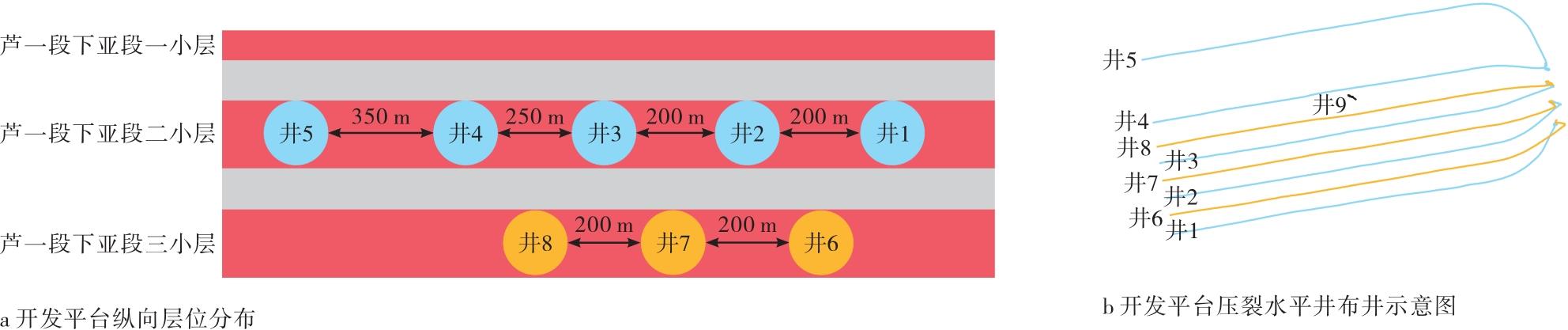
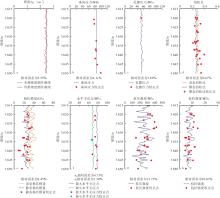
Fig. 2.
Comparison of one-dimensional in-situ stress calculation results with experimental results for Well 9"

Table 1.
Relative errors in results interpreted using three-dimensional and one-dimensional in-situ stress models %"
| 井名 | 杨氏 模量 误差 | 泊松比 误差 | 垂向 应力 误差 | 孔隙 压力 误差 | 最小水平 主应力 误差 | 最大水平 主应力 误差 |
|---|---|---|---|---|---|---|
| 井1 | 1.43 | 0.11 | 1.19 | 4.46 | 0.86 | 0.88 |
| 井2 | 4.41 | 0.73 | 0.34 | 3.91 | 1.82 | 1.48 |
| 井3 | 1.25 | 0.05 | 0.35 | 5.26 | 1.69 | 2.03 |
| 井4 | 1.33 | 0.10 | 1.31 | 4.72 | 2.21 | 2.10 |
| 井5 | 1.39 | 0.28 | 0.26 | 4.98 | 2.67 | 1.98 |
| 井6 | 1.39 | 0.20 | 0.03 | 5.58 | 1.83 | 1.98 |
| 井7 | 1.54 | 0.16 | 0.11 | 4.41 | 1.79 | 1.23 |
| 井8 | 1.48 | 0.08 | 0.10 | 5.16 | 2.01 | 1.66 |
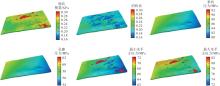
Fig. 3.
Key attributes of three-dimensional geomechanics at the platform"
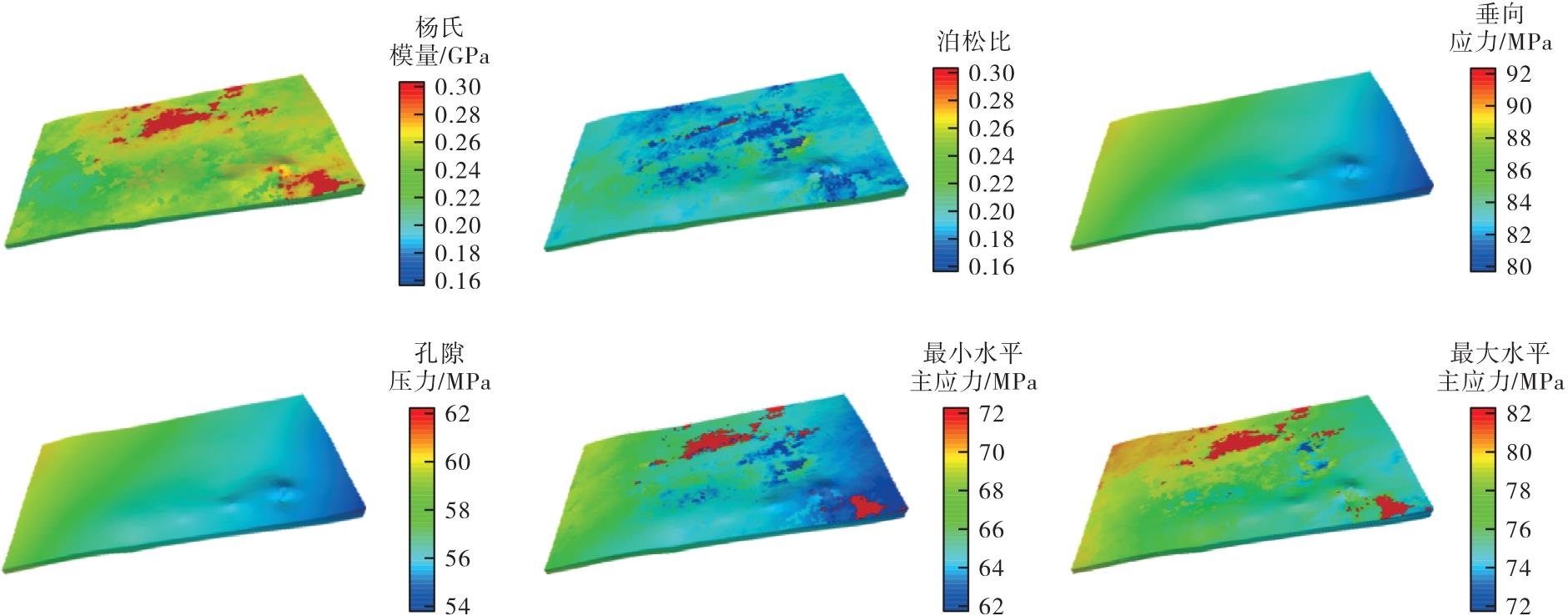
Table 2.
Average values of reservoir physical properties and rock mechanics parameters at the platform"
| 层位 | 孔隙度/ % | 渗透率/ mD | 含油饱和度/ % | 杨氏模量/ GPa | 泊松比 | 垂向应力/ MPa | 最大水平主应力/ MPa | 最小水平主应力/ MPa |
|---|---|---|---|---|---|---|---|---|
| 芦一段下亚段一小层 | 6.15 | 0.052 | 52.69 | 35.74 | 0.208 | 88.2 | 80.2 | 68.9 |
| 芦一段下亚段二小层 | 9.43 | 0.086 | 45.70 | 30.56 | 0.211 | 88.5 | 79.9 | 68.6 |
| 芦一段下亚段三小层 | 6.18 | 0.053 | 41.96 | 28.44 | 0.218 | 88.8 | 79.7 | 69.0 |
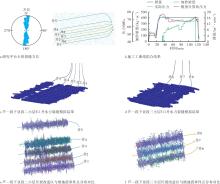
Fig. 4.
Simulation results of hydraulic fracture propagation in 8 fractured horizontal wells"

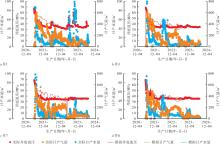
Fig. 5.
Production history matching results of 4 fractured horizontal wells"
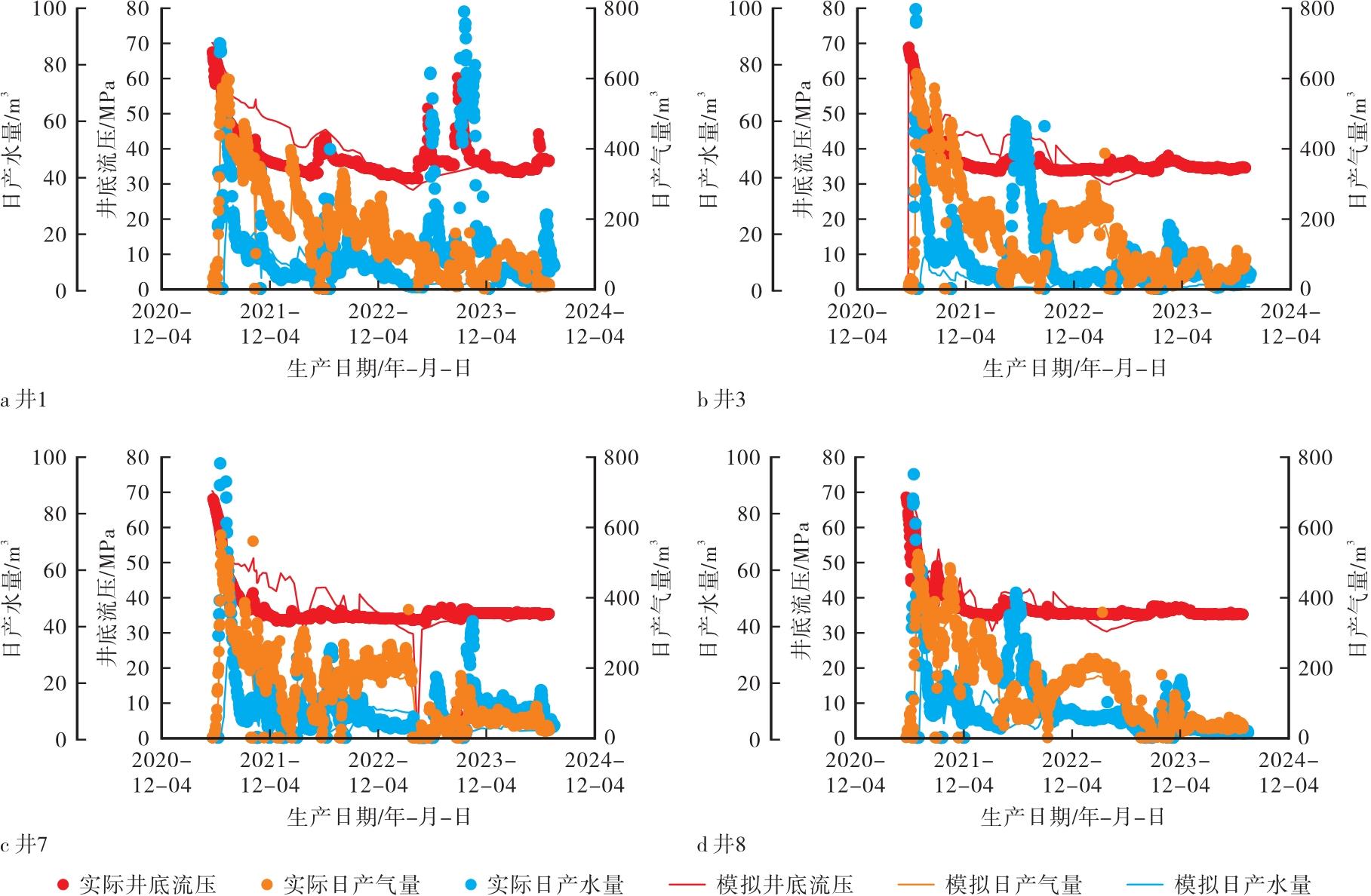
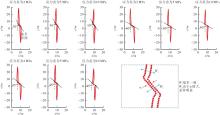
Fig. 6.
Simulation results of single fracture propagation under different deviation angles and stress differences"
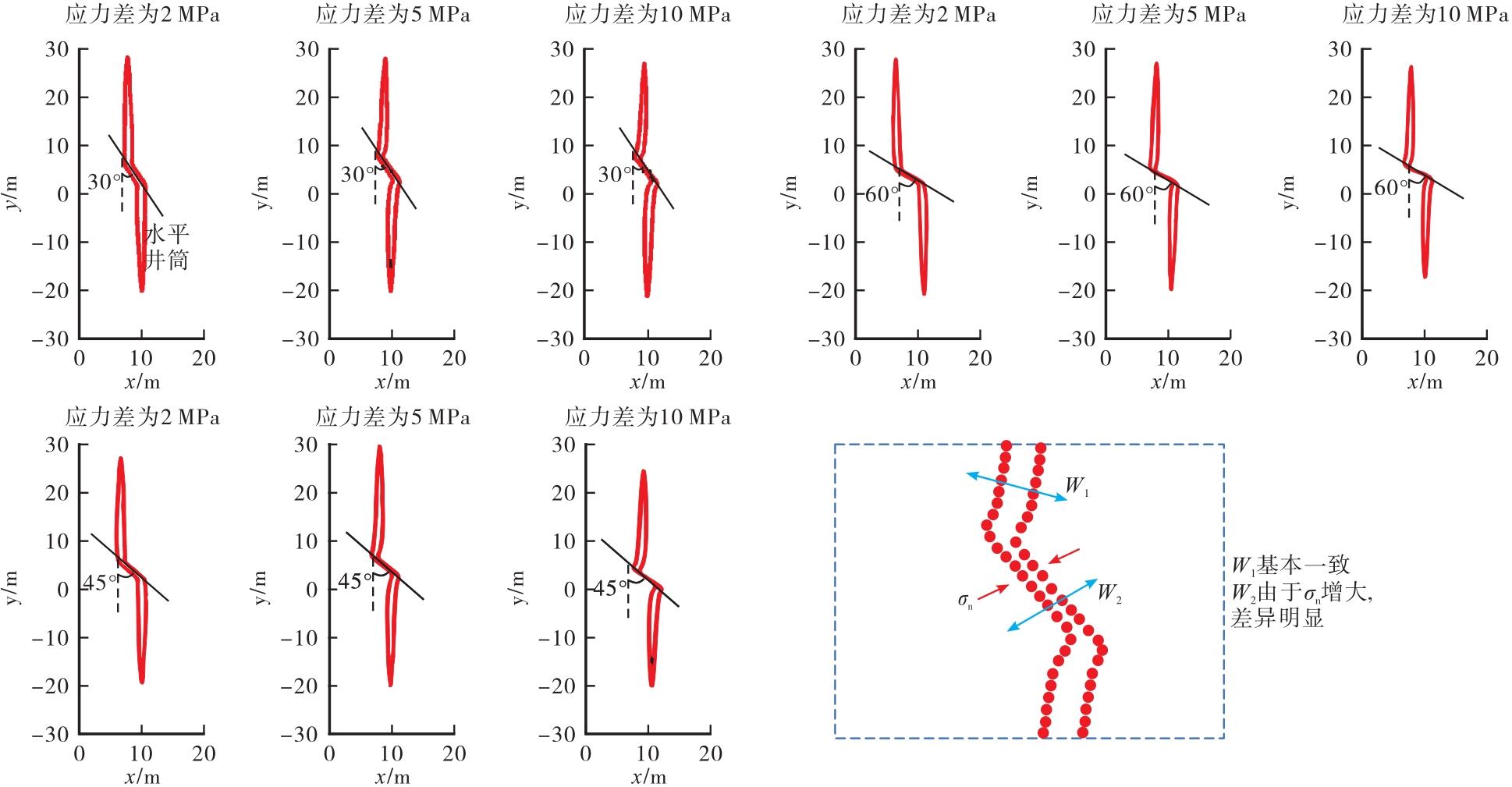
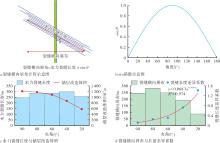
Fig. 7.
Results of Sin function and key hydraulic fracture parameters under different angles"

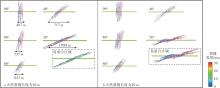
Fig. 8.
Simulation results of hydraulic fractures under different angles and coupling with natural fractures"
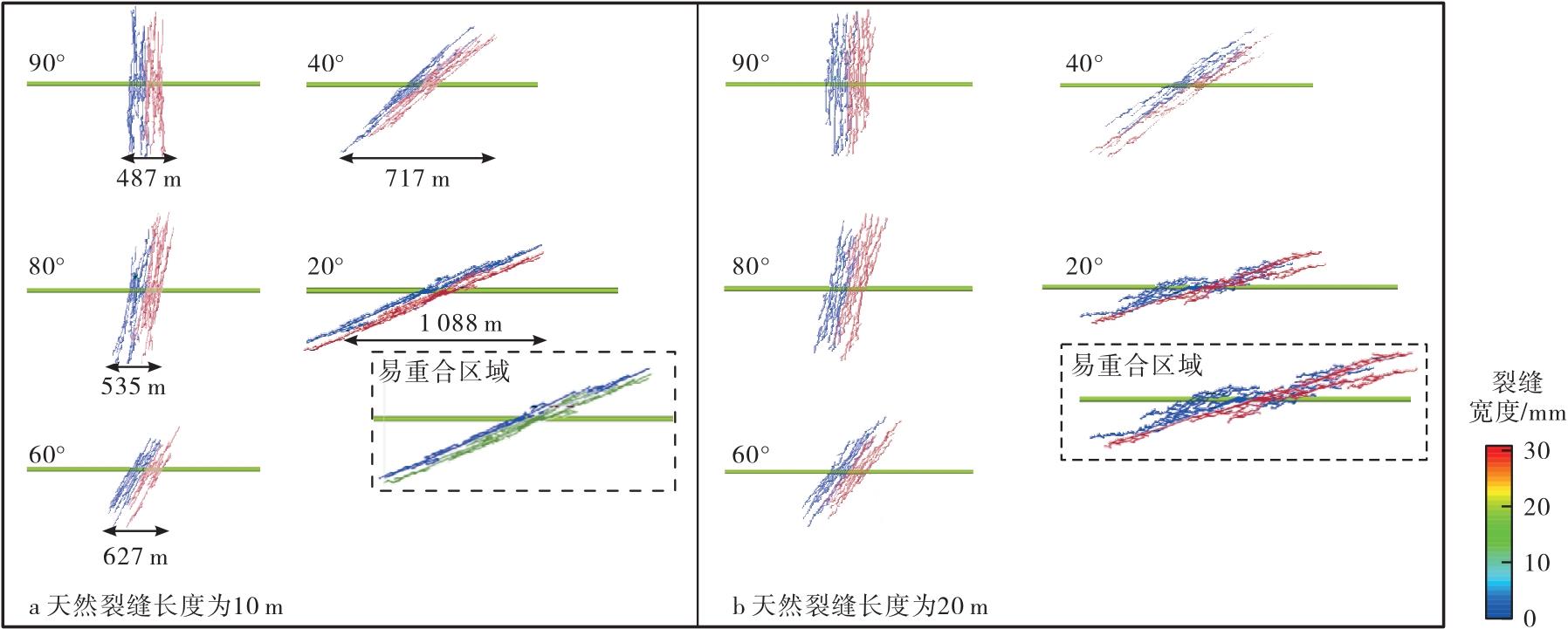
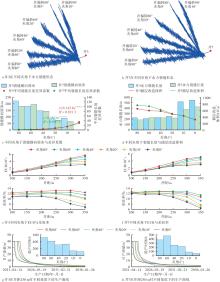
Fig. 9.
Key hydraulic fracture parameters and production performance under different deviation angles"

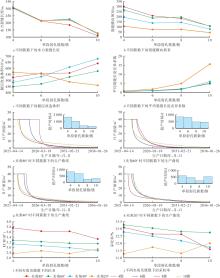
Fig. 10.
Key hydraulic fracture parameters and production performance under four angles and different cluster numbers"
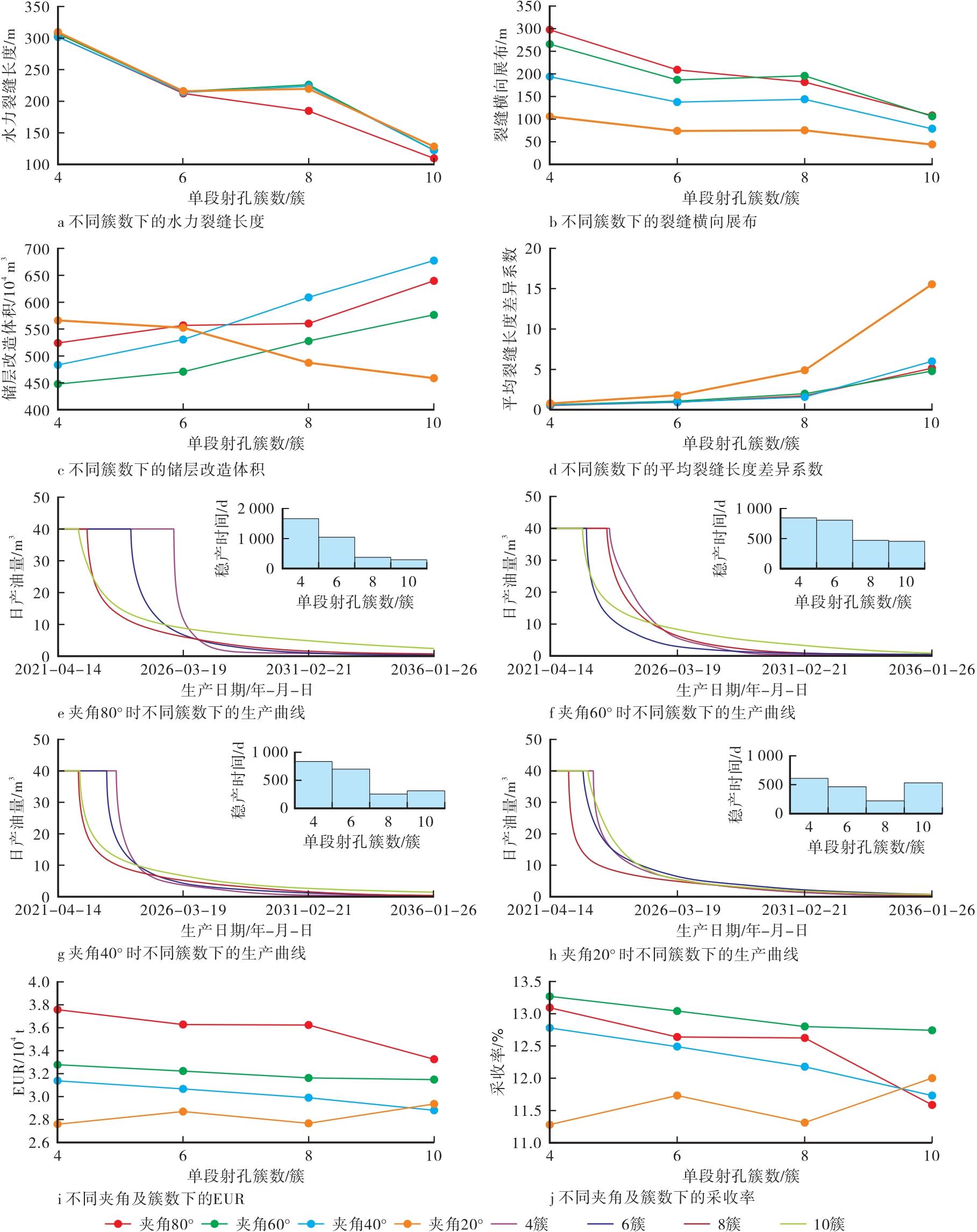
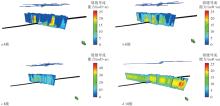
Fig. 11.
Schematic diagram of fracture under different cluster numbers at the angle of 20°"
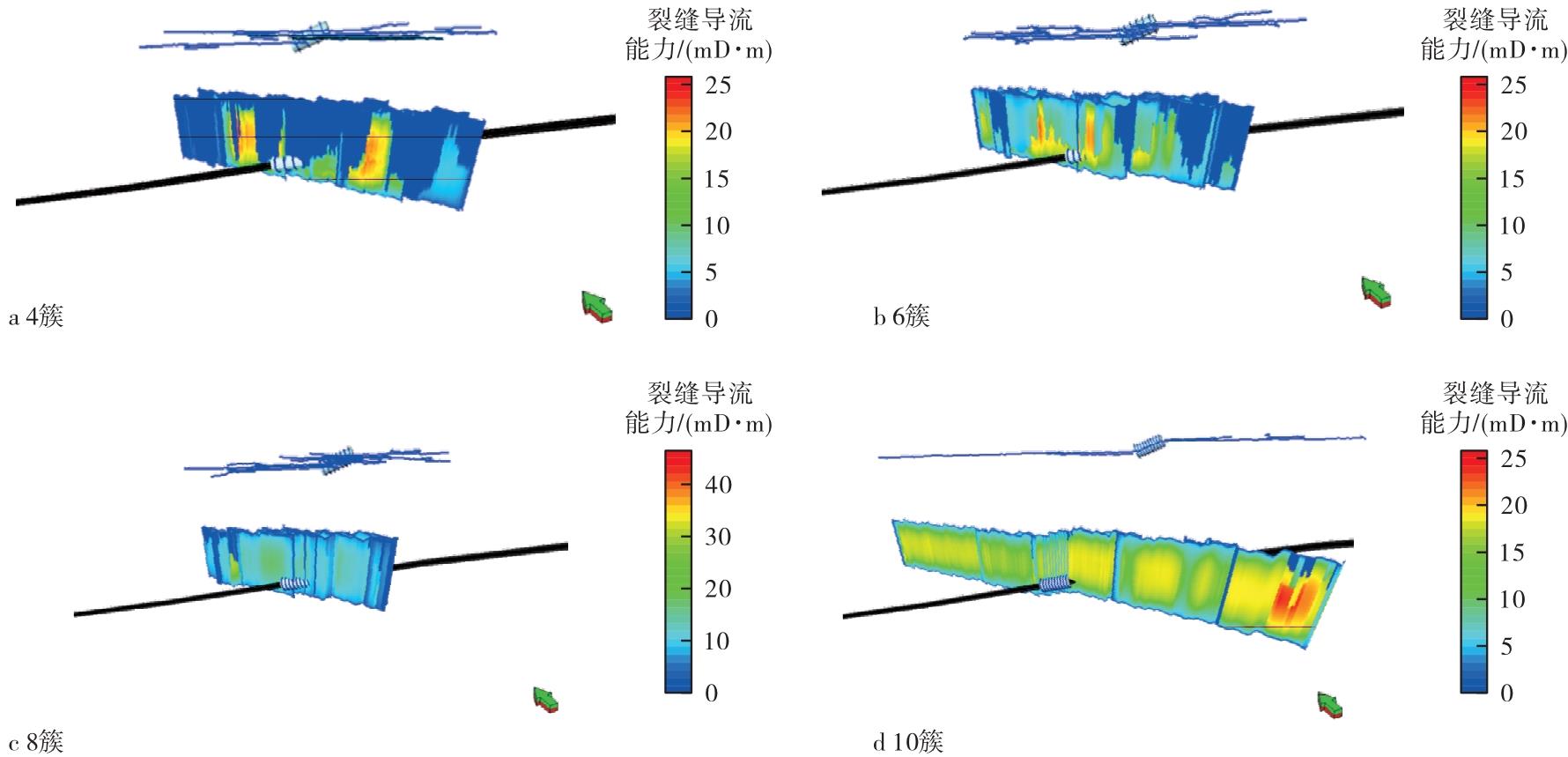
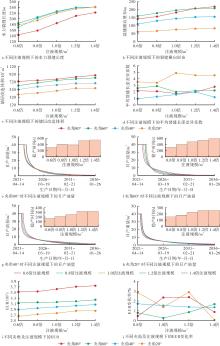
Fig. 12.
Key hydraulic fracture parameters and production performance under four angles and different injection rates"

| [1] |
ZHAO Wenzhi, BIAN Gongsheng, LI Yongxin, et al. “Component flow” conditions and its effects on enhancing production of continental medium-to-high maturity shale oil[J]. Petroleum Exploration and Development, 2024, 51(4):826-838.
doi: 10.1016/S1876-3804(24)60509-4 |
| [2] |
LEI Qun, WENG Dingwei, GUAN Baoshan, et al. Shale oil and gas exploitation in China:Technical comparison with US and development suggestions[J]. Petroleum Exploration and Development, 2023, 50(4):944-954.
doi: 10.1016/S1876-3804(23)60440-9 |
| [3] |
曹炜, 齐银, 马兵, 等. 鄂尔多斯盆地页岩油水平井扇形井网地质工程一体化开发实践[J]. 中国石油勘探, 2024, 29(3):91-103.
doi: 10.3969/j.issn.1672-7703.2024.03.009 |
|
CAO Wei, QI Yin, MA Bing, et al. Geology and engineering integrated development practice of fan well pattern shale oil horizontal wells in Ordos Basin[J]. China Petroleum Exploration, 2024, 29(3):91-103.
doi: 10.3969/j.issn.1672-7703.2024.03.009 |
|
| [4] | 齐洪岩, 王振林, 张艳宁, 等. 吉木萨尔凹陷芦草沟组页岩油藏甜点分类[J]. 新疆石油地质, 2025, 45(2):127-135. |
| QI Hongyan, WANG Zhenlin, ZHANG Yanning, et al. Classification of sweet spots in shale oil reservoir of Lucaogou formation in Jimsar sag,Junggar Basin[J]. Xinjiang Petroleum Geology, 2025, 45(2):127-135. | |
| [5] | 齐洪岩, 吴承美, 胡可, 等. 准噶尔盆地吉木萨尔凹陷页岩油效益开发关键技术与实践[J]. 新疆石油天然气, 2024, 20(3):15-22. |
| QI Hongyan, WU Chengmei, HU Ke, et al. Key technologies and practice of shale oil cost-effective development in Jimsar sag,Junggar Basin[J]. Xinjiang Oil & Gas, 2024, 20(3):15-22. | |
| [6] | 李倩文, 马晓潇, 高波, 等. 美国重点页岩油区勘探开发进展及启示[J]. 新疆石油地质, 2021, 42(5):630-640. |
| LI Qianwen, MA Xiaoxiao, GAO Bo, et al. Progress and enlightenment of exploration and development of major shale oil zones in the USA[J]. Xinjiang Petroleum Geology, 2021, 42(5):630-640. | |
| [7] | 刘哲, 翁定为, 王春鹏. 基于地质工程一体化的整体重复压裂优化设计方法[R]. 杭州: 全国天然气学术年会, 2017. |
| LIU Zhe, WENG Dingwei, WANG Chunpeng. Optimization design method for overall repeated fracturing based on geological engineering integration[R]. Hangzhou: National Natural Gas Academic Annual Conference, 2017. | |
| [8] |
梁兴, 单长安, 蒋佩, 等. 浅层页岩气井全生命周期地质工程一体化应用[J]. 西南石油大学学报(自然科学版), 2021, 43(5):1-18.
doi: 10.11885/j.issn.1674-5086.2021.03.15.01 |
| LIANG Xing, SHAN Chang’an, JIANG Pei, et al. Geology and engineering integration application in the whole life cycle of shallow shale gas wells[J]. Journal of Southwest Petroleum University (Science & Technology Edition), 2021, 43(5):1-18. | |
| [9] | 侯冰, 刘庆, 耿智, 等. 裂缝性致密油藏地质-工程一体化开发[J]. 新疆石油地质, 2018, 39(4):480-484. |
| HOU Bing, LIU Qing, GENG Zhi, et al. Integrated geology-engineering development technology for fractured tight oil reservoirs[J]. Xinjiang Petroleum Geology, 2018, 39(4):480-484. | |
| [10] | 赵福豪, 黄维安, 雍锐, 等. 地质工程一体化研究与应用现状[J]. 石油钻采工艺, 2021, 43(2):131-138. |
| ZHAO Fuhao, HUANG Weian, YONG Rui, et al. Research and application status of geology-engineering integration[J]. Oil Drilling & Production Technology, 2021, 43(2):131-138. | |
| [11] | ERFAN R, NAOMI B, MARK D Z. Wells in the Bakken region significance of well orientation on cumulative production from[C]. Unconventional Resources Technology Conference,Austin,Texas,USA, 2020. |
| [12] | 董文波, 桂志先, 王亚楠, 等. 水平井压裂微地震监测成果的不对称性分析[J]. 石油地球物理勘探, 2023, 58(1):161-169. |
| DONG Wenbo, GUI Zhixian, WANG Ya’nan, et al. Asymmetry analysis of microseismic monitoring results of horizontal well fracturing[J]. Oil Geophysical Prospecting, 2023, 58(1):161-169. | |
| [13] |
何永宏, 李桢, 樊建明, 等. 鄂尔多斯盆地贡岩油开发井网优化技术及实践:以庆城油田为例[J]. 石油学报, 2024, 45(4):683-697.
doi: 10.7623/syxb202404006 |
|
HE Yonghong, LI Zhen, FAN Jianming, et al. Optimization technique of development well pattern of shale oil in Ordos Basin and its application:A case study of Qingcheng oilfield[J]. Acta Petrolei Sinica, 2024, 45(4):683-697.
doi: 10.7623/syxb202404006 |
|
| [14] | SHERRATT J, SHARIFI H A, WEJZEROWSKI F, et al. Optimising well orientation in hydraulic fracturing of naturally fractured shale gas formations[J]. Journal of Natural Gas Science and Engineering, 2021, 94 (Supp. C):104141. |
| [15] |
马嘉令, 盛广龙, 刘红林, 等. 非常规气藏压裂水平井缝网-井网自动优化方法[J]. 天然气地球科学, 2020, 31(8):1168-1177.
doi: 10.11764/j.issn.1672-1926.2020.01.007 |
|
MA Jialing, SHENG Guanglong, LIU Honglin, et al. Automatic optimization method of fracture pattern and well pattern for fractured horizontal wells in unconventional gas reservoirs[J]. Natural Gas Geoscience, 2020, 31(8):1168-1177.
doi: 10.11764/j.issn.1672-1926.2020.01.007 |
|
| [16] | 吴承美, 褚艳杰, 李文波, 等. 提高页岩油水平井开发效果关键技术与应用:以吉木萨尔芦草沟组为例[R]. 西安: 油气田勘探与开发国际会议, 2022. |
| WU Chengmei, CHU Yanjie, LI Wenbo, et al. Key technologies and applications to improve the development effect of shale oil horizontal wells:A case study of the Lucaogou formation in Jimsar[R]. Xi’an: International Field Exploration and Development Conference, 2022. | |
| [17] | 伊明, 黄志强, 张景虹, 等. 准噶尔盆地南缘高泉构造三维地质力学建模及深探井风险应用[J]. 石油钻采工艺, 2021, 43(1):21-28. |
| YI Ming, HUANG Zhiqiang, ZHANG Jinghong, et al. Three-dimensional geomechanical modeling of Gaoquan structure along the southern margin of the Junggar Basin and its application to the risk evaluation of deep exploration wells[J]. Oil Drilling & Production Technology, 2021, 43(1):21-28. | |
| [18] | 舒红林, 仇凯斌, 李庆飞, 等. 页岩气地质力学特征评价方法:中国南方海相强改造区山地页岩地质力学特征[J]. 天然气工业, 2021, 41(增刊1):1-13. |
| SHU Honglin, QIU Kaibin, LI Qingfei, et al. A method for evaluating the geomechanical characteristics of shale gas:The geomechanical characteristics of the mountain shale in the intensively reworked marine area of south China[J]. Natural Gas Industry, 2021,41 (Supp.1):1-13. | |
| [19] |
覃建华, 杨琨, 丁艺, 等. 基于KL-E的地质力学模型参数反演及应用[J]. 西南石油大学学报(自然科学版), 2022, 44(2):65-78.
doi: 10.11885/j.issn.1674-5086.2020.03.02.01 |
| QIN Jianhua, YANG Kun, DING Yi, et al. Inversion of geomechanical model parameters based on KL expansion and its application[J]. Journal of Southwest Petroleum University (Science & Technology Edition), 2022, 44(2):65-78. | |
| [20] |
APONTE J M, WEBBER R, CENTENO M A, 等. 以饱和度测井数据为油藏模型选择标准的改进历史拟合方法[J]. 石油勘探与开发, 2023, 50(2):398-408.
doi: 10.11698/PED.20220442 |
| APONTE J M, WEBBER R, CENTENO M A, et al. Enhanced history matching process by incorporation of saturation logs as model selection criteria[J]. Petroleum Exploration and Development, 2023, 50(2):398-408. | |
| [21] | 刘吉. 页岩气水平井压裂分段及分簇优化研究[R]. 武汉: 油气田勘探与开发国际会议, 2023. |
| LIU Ji. Optimization of fracturing segments and clusters in shale gas horizontal wells[R]. Wuhan: International Field Exploration and Development Conference, 2023. | |
| [22] | ROSTAMI E, BONESS N, ZOBACK M. Significance of well orientation on cumulative production from wells in the Bakken region[R]. Austin,Texas, USA: Unconventional Resources Technology Conference, 2020. |
| [1] | JIN Zhijun, CAO Yan, ZHANG Hong, TANG Yong, QIN Zhijun, LIU Kouqi, LIANG Chenggang, LI Guanfang, HE Wenjun. Main Controlling Factors and Development Practice of Shale Oil Sweet Spots in the Lucaogou Formation, Jimsar Sag, Junggar Basin [J]. Xinjiang Petroleum Geology, 2025, 46(6): 647-658. |
| [2] | MAO Xinjun, WANG Ran, ZHENG Menglin, LI Jing, PAN Jin, WANG Tao, HUANG Liliang, CHANG Qiusheng. Pore Genesis and Diagenetic Evolution of Shale Oil Sweet Spot Reservoirs in Lucaogou Formation, Jimsar Sag [J]. Xinjiang Petroleum Geology, 2025, 46(6): 659-667. |
| [3] | CAO Jian, QIN Zhijun, WEI Chao, XIANG Baoli, LIU Jin. Source-Reservoir Coupling and Sweet Spot Formation Mechanism of Continental Laminated Shale Oil: A Case Study of the Fengcheng Formation, Junggar Basin [J]. Xinjiang Petroleum Geology, 2025, 46(6): 668-683. |
| [4] | LIU Jin, BAI Lei, ZHANG Baozhen, WEI Chao, LEI Haiyan, DENG Yuan, CAO Jian. Microscopic Occurrence and Production Dynamics of Shale Oil in Lucaogou Formation, Jimsar Sag, Junggar Basin [J]. Xinjiang Petroleum Geology, 2025, 46(6): 684-692. |
| [5] | ZOU Yang, CHEN Wenshun, LUO Gang, CHEN Shaorong, CHEN Fangwen, HE Wenjun, LIU Xinlong, ZHU Tao. Main Factors Controlling the Enrichment and High Production of Alkaline Lacustrine Shale Oil in Fengcheng Formation, Mahu Sag, Junggar Basin [J]. Xinjiang Petroleum Geology, 2025, 46(6): 693-702. |
| [6] | WEI Zhaosheng, QI Hongyan, ZHAO Jianfei, HE Jixiang, LIU Kecheng, WANG Junchao. Development Progress and Key Technologies for Cost-Effective Productivity of Shale Oil in Junggar Basin [J]. Xinjiang Petroleum Geology, 2025, 46(6): 703-711. |
| [7] | LI Qing, LUO Gang, LI Yingyan, DENG Yuan, XIAO Dianshi, XIE Xiaoquan. Potential of Replacement Areas for Shale Oil Development in the Lucaogou Formation, Jimsar Sag [J]. Xinjiang Petroleum Geology, 2025, 46(6): 712-722. |
| [8] | LIU Xiangjun, GAN Renzhong, XIONG Jian, TANG Shiqi, WAN Youwei, ZHOU Xin, LIANG Lixi, ZHANG Miao. Dominant Geomechanical Factors Controlling the Volumetric Stimulation Effectiveness in the Shale Oil Reservoirs of the Lucaogou Formation, Jimsar Sag [J]. Xinjiang Petroleum Geology, 2025, 46(6): 723-733. |
| [9] | QI Hongyan, WANG Zhenlin, ZHENG Guoqing, YU Peirong, YANG Wangwang. Unbalanced Fracture Propagation Mechanism During Horizontal Well Intensive Fracturing in Shale Oil Reservoirs [J]. Xinjiang Petroleum Geology, 2025, 46(6): 734-741. |
| [10] | LIN Jiaying, QI Hongyan, CHANG Ting, ZHANG Yunjie, ZHANG Hao, CHEN Gang, LIANG Chenggang, WEI Xiaochen. Numerical Simulation of Strike-Slip Fault Induced Casing Deformation and Optimization of Fracturing Scheme: A Case Study of Shale Oil in Jimsar Sag [J]. Xinjiang Petroleum Geology, 2025, 46(6): 754-761. |
| [11] | DU Xuebiao, ZHANG Jinfeng, XIAO Dianshi, RAN Yang, LIU Yingjie, QIN Jiamin, WANG Liangzhe. NMR Effective Porosity Spectrum Prediction and Resolution Matching Based on ReliefF and LSBoost Ensemble Tree [J]. Xinjiang Petroleum Geology, 2025, 46(6): 762-772. |
| [12] | YAO Juqin, CHEN Gang, TANG Tingming, ZHAO Chunxue, LI Wei, YU Xuefeng, YU Jianglong. Application of Seismic Frequency-Increasing Method Based on Point Complex Spectrum in Shale Oil Sweet Spot Prediction, Jimsar Sag, Junggar Basin [J]. Xinjiang Petroleum Geology, 2025, 46(6): 773-778. |
| [13] | MAO Rui, WEI Jiamin, WANG Pan, LI Qingqing, ZHAO Lei. Logging-Based Evaluation of Key Parameters of Shale Oil Reservoirs in Fengcheng Formation, Mahu Sag [J]. Xinjiang Petroleum Geology, 2025, 46(6): 779-789. |
| [14] | LI Yanghu, WANG Zhenlin, SHAO Huanhuan, CHEN Shanhe, TANG Fukang, LIU Caiguang, WANG Wei, ZHANG Hao. Acoustic Anisotropy Correction Based on Clay Mineral Content in Shale Oil Horizontal Wells [J]. Xinjiang Petroleum Geology, 2025, 46(6): 790-799. |
| [15] | SHI Liang, ZHANG Yaxiong. Lithological Differences of Chang 7 Mud-Shale System and Their Controls on Shale Oil Content in Ansai Area, Ordos Basin [J]. Xinjiang Petroleum Geology, 2025, 46(3): 308-317. |
| Viewed | ||||||
|
Full text |
|
|||||
|
Abstract |
|
|||||
