

新疆石油地质 ›› 2026, Vol. 47 ›› Issue (1): 46-56.doi: 10.7657/XJPG20260105
陈绍蓉1( ), 赵毅1, 邹阳1, 任海姣1, 陈方文2, 吴俊军1
收稿日期:2025-04-30
出版日期:2026-02-01
发布日期:2026-01-23
作者简介:陈绍蓉(1989-),女,重庆万州人,工程师,博士,非常规油气地质,(Tel)15801290876(Email)基金资助:
CHEN Shaorong1(), ZHAO Yi1, ZOU Yang1, REN Haijiao1, CHEN Fangwen2, WU Junjun1
Received:2025-04-30
Online:2026-02-01
Published:2026-01-23
摘要:
准噶尔盆地玛湖凹陷二叠系风城组的古沉积环境特征控制了页岩油甜点发育,但碱湖古沉积环境对页岩油甜点控制机制不清,制约了页岩油高效勘探和开发。因此,基于玛页1井风城组岩心、地球化学和测井等资料,分析了不同品质烃源岩、储集层和源-储组合形成的古水深、古气候、古盐度和古氧化还原条件,剖析了古沉积环境对页岩油甜点发育的影响。研究表明:玛页1井风城组优质Ⅰ类源-储组合形成于古水深变化相对较小、古气候相对暖湿且碳酸盐和陆源碎屑沉积物含量较高、古盐度相对较低的咸水环境和古还原条件更强的沉积环境。适宜的沉积环境为高产烃率藻类有机质絮凝和富集提供条件,促进了高初级生产力的形成,并为有机质保存提供条件,促进较低成熟度有机质大量生烃。夹层型、纹层型和纯页岩型的源-储组合分别对应Ⅰ类、Ⅱ类和Ⅲ类源-储组合,排油效率依次降低;古沉积环境通过“源-储-保”三元机制影响页岩油甜点发育。确定了风城组古沉积环境对页岩油甜点发育的控制机制,为页岩油勘探提供理论支撑。
中图分类号:
陈绍蓉, 赵毅, 邹阳, 任海姣, 陈方文, 吴俊军. 玛湖凹陷风城组古沉积环境特征及其对页岩油甜点的影响[J]. 新疆石油地质, 2026, 47(1): 46-56.
CHEN Shaorong, ZHAO Yi, ZOU Yang, REN Haijiao, CHEN Fangwen, WU Junjun. Influences of Paleo-Sedimentary Environment on Shale Oil Sweet Spots in the Fengcheng Formation, Mahu Sag, Junggar Basin[J]. Xinjiang Petroleum Geology, 2026, 47(1): 46-56.

图1
玛湖凹陷构造位置"

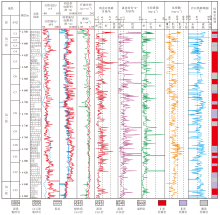
图2
玛页1井风城组烃源岩有机地球化学特征"


图3
玛页1井风城组页岩油储集层薄片特征 a—白云质粉砂岩,风三段,4 612.31 m,单偏光;b—白云质粉砂岩,风二段,4 665.91 m,单偏光;c—白云质粉砂岩,风二段,4 669.63 m,单偏光;d—石灰质泥岩,风二段,4 751.32 m,正交偏光;e—含白云石灰质泥岩,风二段,4 751.60 m,单偏光;f—白云质泥岩,风二段,4 752.81 m,正交偏光;g—泥质白云岩,风二段,4 663.69 m,单偏光;h—泥质微晶白云岩,风二段,4 664.85 m,正交偏光;i—含粉—细砂泥质白云岩,风二段,4 665.83 m,正交偏光。"


图4
玛页1井风城组页岩油储集层综合柱状剖面"

表1
玛页1井风城组源-储组合特征"
| 源-储组合 级别 | 烃源岩 级别 | 储集层 级别 | 总有机碳 含量/% | 氯仿沥青“A” 含量/% | 孔隙度/ % | 裂缝线密度/ (条·dm-1) | 含油饱和度 指数/(mg·g-1) |
|---|---|---|---|---|---|---|---|
| Ⅰ类 源-储组合 | 优质 | 优质 | >1.0 | >0.20 | >2 | >8 | >75 |
| 中等 | |||||||
| Ⅱ类 源-储组合 | 中等 | 优质 | 0.5~1.0 | 0.10~0.20 | >2 | >8 | >75 |
| 中等 | |||||||
| 优质 | 一般 | >1.0 | >0.20 | <2 | <8 | 50~75 | |
| Ⅲ类 源-储组合 | 中等 | 一般 | 0.5~1.0 | 0.10~0.20 | <2 | <8 | 50~75 |
| 一般 | 优质 | <0.5 | <0.10 | ||||
| 中等 | |||||||
| 一般 |
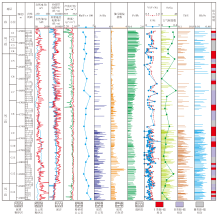
图5
玛页1井风城组源-储组合和微量元素特征"

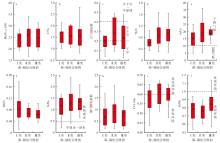
图6
玛页1井风城组3类源-储组合的古沉积环境地球化学特征"

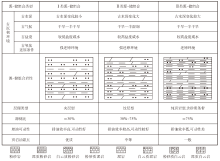
图7
玛页1井风城组古沉积环境对页岩油甜点控制作用模式"
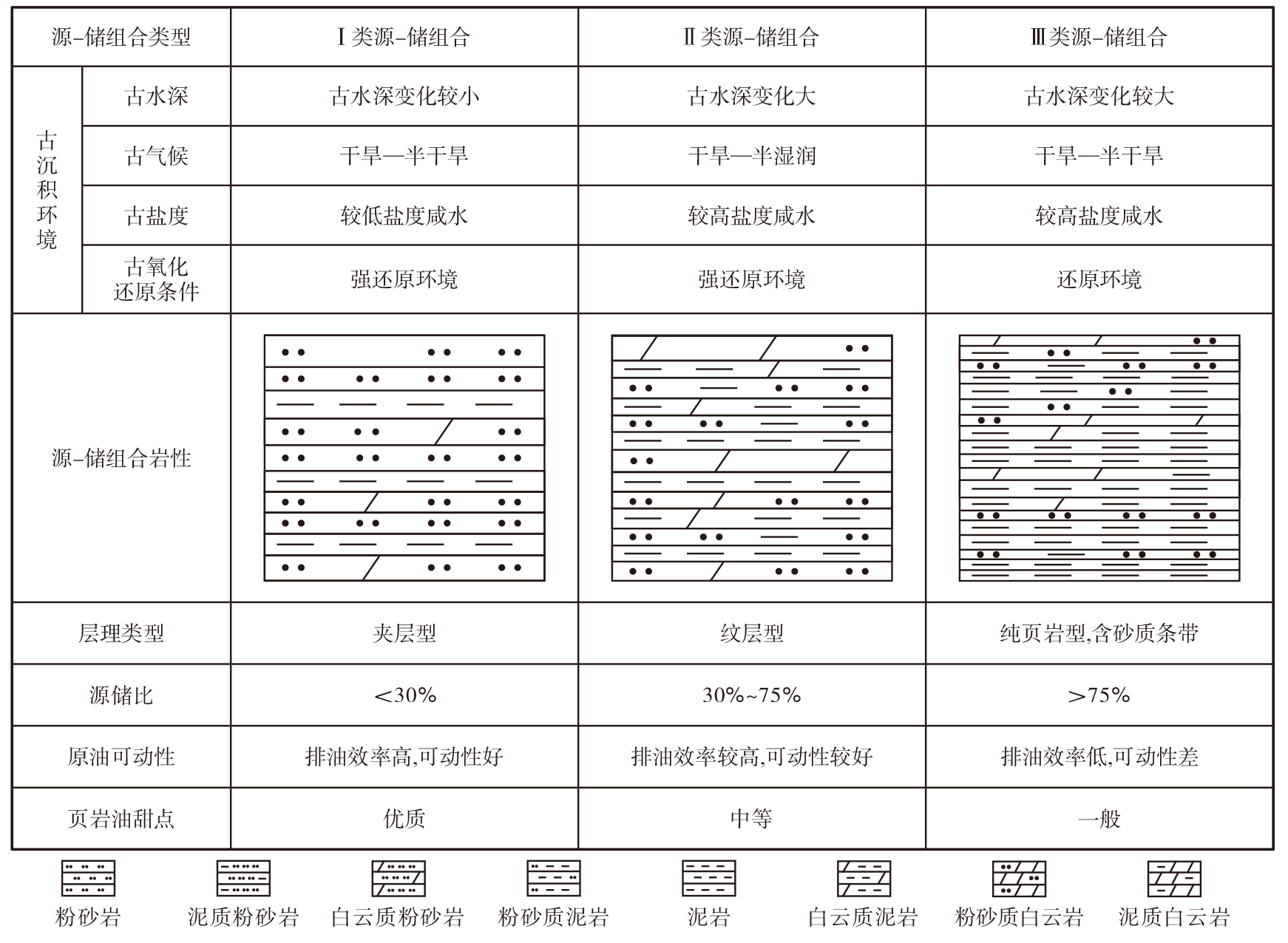
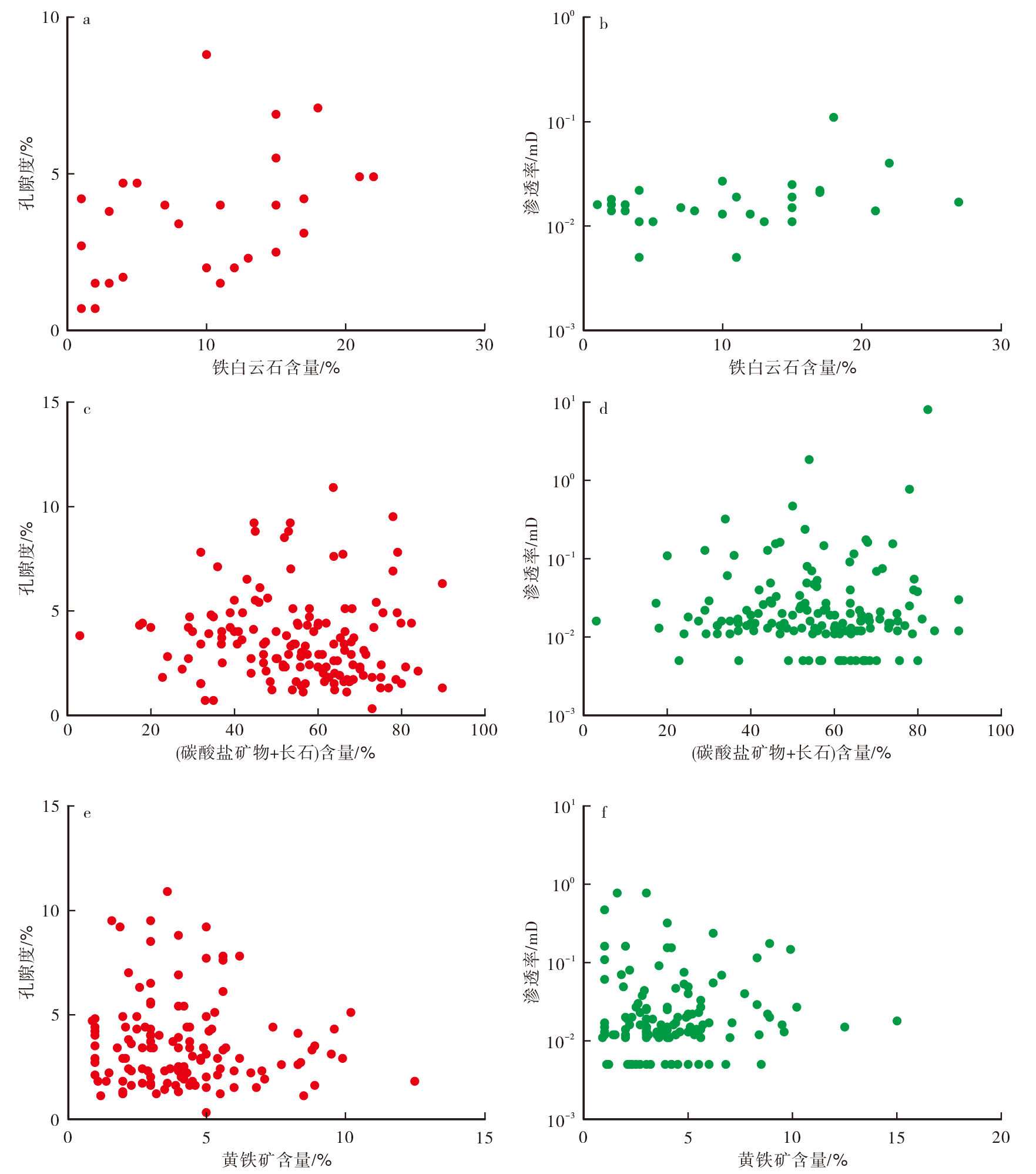
图8
玛页1井风城组储集层物性与矿物含量的关系"
| [1] | 郭旭升, 马晓潇, 黎茂稳, 等. 陆相页岩油富集机理探讨[J]. 石油与天然气地质, 2023, 44(6):1333-1349. |
| GUO Xusheng, MA Xiaoxiao, LI Maowen, et al. Mechanisms for lacustrine shale oil enrichment in Chinese sedimentary basins[J]. Oil & Gas Geology, 2023, 44(6):1333-1349. | |
| [2] | 郭旭升, 申宝剑, 李志明, 等. 论我国页岩油气的统一性[J]. 石油实验地质, 2024, 46(5):889-905. |
| GUO Xusheng, SHEN Baojian, LI Zhiming, et al. Discussion on the uniformity of shale oil and gas in China[J]. Petroleum Geology & Experiment, 2024, 46(5):889-905. | |
| [3] | 左名圣, 陈浩, 赵杰文, 等. 准噶尔盆地吉木萨尔凹陷页岩油藏注CO2吞吐提高采收率机理[J]. 天然气工业, 2024, 44(4):126-134. |
| ZUO Mingsheng, CHEN Hao, ZHAO Jiewen, et al. Mechanism of CO2 EOR in shale oil reservoirs in the Jimsar sag,the Junggar Basin[J]. Natural Gas Industry, 2024, 44(4):126-134. | |
| [4] | 王鸣川, 王燃, 岳慧, 等. 页岩油微观渗流机理研究进展[J]. 石油实验地质, 2024, 46(1):98-110. |
| WANG Mingchuan, WANG Ran, YUE Hui, et al. Research progress of microscopic percolation mechanism of shale oil[J]. Petroleum Geology & Experiment, 2024, 46(1):98-110. | |
| [5] | 孙志刚, 于春磊, 陈辉, 等. 陆相页岩油开发实验技术现状与展望[J]. 油气地质与采收率, 2024, 31(5):186-198. |
| SUN Zhigang, YU Chunlei, CHEN Hui, et al. Progress and prospect of experimental technologies for continental shale oil development[J]. Petroleum Geology and Recovery Efficiency, 2024, 31(5):186-198. | |
| [6] | 李政, 包友书, 朱日房, 等. 页岩油赋存特征、可动性实验技术及研究方法进展[J]. 油气地质与采收率, 2024, 31(4):84-95. |
| LI Zheng, BAO Youshu, ZHU Rifang, et al. Progress in experimental techniques and research methods for shale oil occurrence characteristics and mobility[J]. Petroleum Geology and Recovery Efficiency, 2024, 31(4):84-95. | |
| [7] | 罗群, 红兰, 高阳, 等. 致密油源储组合差异富集机制与控藏模式:以酒泉盆地青西凹陷为例[J]. 石油实验地质, 2023, 45(1):1-10. |
| LUO Qun, HONG Lan, GAO Yang, et al. Differential mechanism of tight oil enrichment and reservoir controlling model of source and reservoir combinations:A case study of Qingxi sag,Jiuquan Basin[J]. Petroleum Geology & Experiment, 2023, 45(1):1-10. | |
| [8] | 李建忠, 郑民, 陈晓明, 等. 非常规油气内涵辨析、源-储组合类型及中国非常规油气发展潜力[J]. 石油学报, 2015, 36(5):521-532. |
| LI Jianzhong, ZHENG Min, CHEN Xiaoming, et al. Connotation analyses,source-reservoir assemblage types and development potential of unconventional hydrocarbon in China[J]. Acta Petrolei Sinica, 2015, 36(5):521-532. | |
| [9] | 李娜, 李卉, 刘鸿, 等. 玛湖凹陷玛页1井风城组页岩油地质甜点优选[J]. 新疆石油地质, 2024, 45(3):271-278. |
| LI Na, LI Hui, LIU Hong, et al. Optimization of geological sweet spots for shale oil in Fengcheng formation in Well Maye-1,Mahu sag[J]. Xinjiang Petroleum Geology, 2024, 45(3):271-278. | |
| [10] |
REMÍREZ M N, ALGEO T J. Paleosalinity determination in ancient epicontinental seas:A case study of the T-OAE in the Cleveland Basin(UK)[J]. Earth-Science Reviews, 2020, 201:103072.
doi: 10.1016/j.earscirev.2019.103072 |
| [11] |
WEI Wei, ALGEO T J. Elemental proxies for paleosalinity analysis of ancient shales and mudrocks[J]. Geochimica et Cosmochimica Acta, 2020, 287:341-366.
doi: 10.1016/j.gca.2019.06.034 |
| [12] |
DIDYK B M, SIMONEIT B R T, BRASSELL S C, et al. Organic geochemical indicators of palaeoenvironmental conditions of sedimentation[J]. Nature, 1978, 272:216-222.
doi: 10.1038/272216a0 |
| [13] |
龚德瑜, 刘泽阳, 何文军, 等. 准噶尔盆地玛湖凹陷风城组有机质多元富集机制[J]. 石油勘探与开发, 2024, 51(2):260-272.
doi: 10.11698/PED.20230673 |
| GONG Deyu, LIU Zeyang, HE Wenjun, et al. Multiple enrichment mechanisms of organic matter in the Fengcheng formation of Mahu sag,Junggar Basin,NW China[J]. Petroleum Exploration and Development, 2024, 51(2):260-272. | |
| [14] |
KALUGIN I, SELEGEI V, GOLDBERG E, et al. Rhythmic fine-grained sediment deposition in Lake Teletskoye,Altai,Siberia,in relation to regional climate change[J]. Quaternary International, 2005, 136(1):5-13.
doi: 10.1016/j.quaint.2004.11.003 |
| [15] | 贾承造, 王祖纲, 姜林, 等. 中国页岩油勘探开发研究进展与科学技术问题[J]. 世界石油工业, 2024, 31(4):1-11. |
| JIA Chengzao, WANG Zugang, JIANG Lin, et al. Progress and key scientific and technological problems of shale oil exploration and development in China[J]. World Petroleum Industry, 2024, 31(4):1-11. | |
| [16] | 马跃, 向卿谊, 丁康乐. 国内外油页岩工业发展现状[J]. 世界石油工业, 2024, 31(1):16-25. |
| MA Yue, XIANG Qingyi, DING Kangle. Development of oil shale at home and abroad[J]. World Petroleum Industry, 2024, 31(1):16-25. | |
| [17] | 支东明, 冷筠滢, 谢安, 等. 准噶尔盆地玛湖凹陷风城组泥页岩生物标志化合物特征与赋存状态研究[J]. 石油实验地质, 2024, 46(5):954-964. |
| ZHI Dongming, LENG Junying, XIE An, et al. Characteristics and occurrence states of shale biomarker compounds in Fengcheng formation,Mahu sag,Junggar Basin[J]. Petroleum Geology & Experiment, 2024, 46(5):954-964. | |
| [18] | 赵喆, 白斌, 刘畅, 等. 中国石油陆上中—高成熟度页岩油勘探现状、进展与未来思考[J]. 石油与天然气地质, 2024, 45(2):327-340. |
| ZHAO Zhe, BAI Bin, LIU Chang, et al. Current status,advances,and prospects of CNPC’s exploration of onshore moderately to highly mature shale oil reservoirs[J]. Oil & Gas Geology, 2024, 45(2):327-340. | |
| [19] | 秦志军, 陈丽华, 李玉文, 等. 准噶尔盆地玛湖凹陷下二叠统风城组碱湖古沉积背景[J]. 新疆石油地质, 2016, 37(1):1-6. |
| QIN Zhijun, CHEN Lihua, LI Yuwen, et al. Paleo-sedimentary setting of the Lower Permian Fengcheng alkali lake in Mahu sag,Junggar Basin[J]. Xinjiang Petroleum Geology, 2016, 37(1):1-6. | |
| [20] | 钱永新, 邹阳, 赵辛楣, 等. 准噶尔盆地玛湖凹陷玛页1井二叠系风城组全井段岩心剖析与油气地质意义[J]. 油气藏评价与开发, 2022, 12(1):204-214. |
| QIAN Yongxin, ZOU Yang, ZHAO Xinmei, et al. Full core analysis and petroleum geological significance of Permian Fengcheng formation in Well MY1,Mahu sag[J]. Petroleum Reservoir Evaluation and Development, 2022, 12(1):204-214. | |
| [21] |
邹阳, 韦盼云, 曹元婷, 等. 碱湖型页岩油“甜点”分类与主控因素:以准噶尔盆地风城组为例[J]. 石油学报, 2023, 44(3):458-470.
doi: 10.7623/syxb202303005 |
|
ZOU Yang, WEI Panyun, CAO Yuanting, et al. Classification and main controlling factors of sweet spots of alkaline lake type shale oil:A case study of Fengcheng formation in Junggar Basin[J]. Acta Petrolei Sinica, 2023, 44(3):458-470.
doi: 10.7623/syxb202303005 |
|
| [22] |
张志杰, 袁选俊, 汪梦诗, 等. 准噶尔盆地玛湖凹陷二叠系风城组碱湖沉积特征与古环境演化[J]. 石油勘探与开发, 2018, 45(6):972-984.
doi: 10.11698/PED.2018.06.05 |
| ZHANG Zhijie, YUAN Xuanjun, WANG Mengshi, et al. Alkaline-lacustrine deposition and paleoenvironmental evolution in Permian Fengcheng formation at the Mahu sag,Junggar Basin,NW China[J]. Petroleum Exploration and Development, 2018, 45(6):972-984. | |
| [23] |
唐勇, 郑孟林, 王霞田, 等. 准噶尔盆地玛湖凹陷风城组烃源岩沉积古环境[J]. 天然气地球科学, 2022, 33(5):677-692.
doi: 10.11764/j.issn.1672-1926.2022.01.009 |
|
TANG Yong, ZHENG Menglin, WANG Xiatian, et al. Sedimentary paleoenvironment of source rocks of Fengcheng formation in Mahu sag,Junggar Basin[J]. Natural Gas Geoscience, 2022, 33(5):677-692.
doi: 10.11764/j.issn.1672-1926.2022.01.009 |
|
| [24] | 邹阳, 戚艳平, 宋栋, 等. 玛页1井风城组页岩油藏地质特征及甜点评价[J]. 新疆石油地质, 2022, 43(6):714-723. |
| ZOU Yang, QI Yanping, SONG Dong, et al. Geological characteristics and sweet spot evaluation of shale oil reservoir in Fengcheng formation in Well Maye-1[J]. Xinjiang Petroleum Geology, 2022, 43(6):714-723. | |
| [25] | 何文军, 宋永, 汤诗棋, 等. 玛湖凹陷二叠系风城组全油气系统成藏机理[J]. 新疆石油地质, 2022, 43(6):663-673. |
| HE Wenjun, SONG Yong, TANG Shiqi, et al. Hydrocarbon accumulation mechanism of total petroleum system in Permian Fengcheng formation,Mahu sag[J]. Xinjiang Petroleum Geology, 2022, 43(6):663-673. | |
| [26] | 朱越, 伍顺伟, 邓玉森, 等. 玛湖凹陷风城组储集层孔喉结构及流体赋存特征[J]. 新疆石油地质, 2024, 45(3):286-295. |
| ZHU Yue, WU Shunwei, DENG Yusen, et al. Pore throat structures and fluid occurrences of reservoirs in Fengcheng formation,Mahu sag[J]. Xinjiang Petroleum Geology, 2024, 45(3):286-295. | |
| [27] | 张涛, 王琳霖, 廖慧鸿, 等. 沉积盆地古水深恢复方法与研究进展[J]. 沉积与特提斯地质, 2024, 44(3):582-599. |
| ZHANG Tao, WANG Linlin, LIAO Huihong, et al. Methods and research progress of paleo-water depth reconstruction in sedimentary basins[J]. Sedimentary Geology and Tethyan Geology, 2024, 44(3):582-599. | |
| [28] | 贾建亮. 基于地球化学-地球物理的松辽盆地上白垩统油页岩识别与资源评价[D]. 吉林: 吉林大学, 2012. |
| JIA Jianliang. Research on the recognition and resource evaluation of the Upper Cretaceous oil shale based on geochemistry-geophysics technique in the Songliao Basin(NE,China)[D]. Jilin: Jilin University, 2012. | |
| [29] | 金章东, 张恩楼. 湖泊沉积物Rb/Sr比值的古气候含义[J]. 科学技术与工程, 2002, 2(3):20-22. |
| JIN Zhangdong, ZHANG Enlou. Paleoclimate implications of Rb/Sr ratios from lake sediments[J]. Science Technology and Engineering, 2002, 2(3):20-22. | |
| [30] | 魏巍, ALGEO T J, 陆永潮, 等. 古盐度指标与渤海湾盆地古近系海侵事件初探[J]. 沉积学报, 2021, 39(3):571-592. |
| WEI Wei, ALGEO T J, LU Yongchao, et al. Paleosalinity proxies and marine incursions into the Paleogene Bohai Bay Basin lake system,northeastern China[J]. Acta Sedimentologica Sinica, 2021, 39(3):571-592. | |
| [31] | MOLDOWAN J M, WOLFGANG K S, GALLEGOS E J. Relationship between petroleum composition and depositional environment of petroleum source rocks[J]. AAPG Bulletin, 1985, 69:1255-1268. |
| [32] |
JONES B, MANNING D A C. Comparison of geochemical indices used for the interpretation of Palaeoredox conditions in ancient mudstones[J]. Chemical Geology, 1994, 111:111-129.
doi: 10.1016/0009-2541(94)90085-X |
| [33] |
HATCH J R, LEVENTHAL J S. Relationship between inferred redox potential of the depositional environment and geochemistry of the Upper Pennsylvanian(Missourian) Stark shale member of the Dennis limestone,Wabaunsee county,Kansas,USA[J]. Chemical Geology, 1992, 99:65-82.
doi: 10.1016/0009-2541(92)90031-Y |
| [34] |
CAO Jian, XIA Liuwen, WANG Tingting, et al. An alkaline lake in the Late Paleozoic Ice Age(LPIA):A review and new insights into paleoenvironment and petroleum geology[J]. Earth-Science Reviews, 2020, 202:103091.
doi: 10.1016/j.earscirev.2020.103091 |
| [35] | BASKIN D K, PETERS K E. Early generation characteristics of a sulfur-rich monterey kerogen[J]. The American Association of Petroleum Geologists Bulletin, 1992, 76(1):1-13. |
| [36] | 李二庭, 潘越扬, 杨光庆, 等. 准噶尔盆地吉木萨尔凹陷二叠系芦草沟组不同源储结构页岩生排油实验研究[J]. 石油实验地质, 2023, 45(4):705-713. |
| LI Erting, PAN Yueyang, YANG Guangqing, et al. Experimental study on hydrocarbon generation and expulsion characteristics of shale with different source-reservoir structures in Lucaogou formation,Jimsar sag,Junggar Basin[J]. Petroleum Geology & Experiment, 2023, 45(4):705-713. |
| [1] | 黄立良, 邹阳, 杨勇强, 李广兴, 吴俊军, 姜振学, 刘新龙. 玛湖凹陷风城组二段页岩油层系伴生碱矿特征及沉积发育模式[J]. 新疆石油地质, 2026, 47(1): 11-19. |
| [2] | 吕厚宽, 张磊, 安志渊, 况昊, 豆方鹏, 李存, 潘浪. 玛湖凹陷—沙湾凹陷中—下二叠统富火山碎屑砂砾岩储层成因[J]. 新疆石油地质, 2026, 47(1): 20-30. |
| [3] | 芦慧, 汪飞, 张译丹, 汪俊伟, 张金龙, 陈磊, 肖贝, 杨皝, 李臣. 准噶尔盆地西部隆起现今地温场分布及地热资源评价[J]. 新疆石油地质, 2026, 47(1): 92-102. |
| [4] | 金之钧, 曹琰, 张虹, 唐勇, 秦志军, 刘扣其, 梁成钢, 李关访, 何文军. 吉木萨尔凹陷芦草沟组页岩油甜点主控因素研究与实践[J]. 新疆石油地质, 2025, 46(6): 647-658. |
| [5] | 毛新军, 王然, 郑孟林, 李菁, 潘进, 王韬, 黄立良, 常秋生. 吉木萨尔凹陷芦草沟组页岩油甜点储集层孔隙成因及成岩演化[J]. 新疆石油地质, 2025, 46(6): 659-667. |
| [6] | 曹剑, 秦志军, 魏超, 向宝力, 刘金. 陆相纹层型页岩油源储耦合与甜点形成机理——以准噶尔盆地风城组为例[J]. 新疆石油地质, 2025, 46(6): 668-683. |
| [7] | 刘金, 白雷, 张宝真, 魏超, 雷海艳, 邓远, 曹剑. 吉木萨尔凹陷芦草沟组页岩油微观赋存特征与开采动态响应[J]. 新疆石油地质, 2025, 46(6): 684-692. |
| [8] | 邹阳, 陈文顺, 罗刚, 陈绍蓉, 陈方文, 何文军, 刘新龙, 朱涛. 玛湖凹陷风城组碱湖页岩油富集和高产主控因素[J]. 新疆石油地质, 2025, 46(6): 693-702. |
| [9] | 魏兆胜, 齐洪岩, 赵建飞, 何吉祥, 刘可成, 王俊超. 准噶尔盆地页岩油开发进展及效益建产关键技术[J]. 新疆石油地质, 2025, 46(6): 703-711. |
| [10] | 李庆, 罗刚, 李映艳, 邓远, 肖佃师, 谢潇权. 吉木萨尔凹陷芦草沟组页岩油接替区开发潜力[J]. 新疆石油地质, 2025, 46(6): 712-722. |
| [11] | 刘向君, 甘仁忠, 熊健, 汤诗棋, 万有维, 周鑫, 梁利喜, 张淼. 吉木萨尔凹陷芦草沟组页岩油储层体积改造主控地质力学因素[J]. 新疆石油地质, 2025, 46(6): 723-733. |
| [12] | 齐洪岩, 王振林, 郑国庆, 余佩蓉, 杨旺旺. 页岩油储集层水平井密切割压裂裂缝非均衡扩展机理[J]. 新疆石油地质, 2025, 46(6): 734-741. |
| [13] | 李映艳, 丁艺, 罗刚, 丁怀宇, 唐慧莹, 贺戈. 基于地质工程一体化的井网-缝网协同优化——以准噶尔盆地吉木萨尔凹陷页岩油为例[J]. 新疆石油地质, 2025, 46(6): 742-753. |
| [14] | 吝佳莹, 齐洪岩, 常婷, 张韵洁, 张浩, 陈刚, 梁成钢, 魏晓琛. 走滑断裂滑移诱发套管变形数值模拟及压裂方案优化——以吉木萨尔凹陷页岩油为例[J]. 新疆石油地质, 2025, 46(6): 754-761. |
| [15] | 杜雪彪, 张金风, 肖佃师, 冉阳, 刘英杰, 秦嘉敏, 王良哲. 基于ReliefF和LSBoost集成树核磁有效孔隙度频谱预测及分辨率匹配研究[J]. 新疆石油地质, 2025, 46(6): 762-772. |
| 阅读次数 | ||||||
|
全文 |
|
|||||
|
摘要 |
|
|||||
